REVIEW · TOURS
Shore Excursion: North and South Sides of Bonaire
The most interesting part of this Bonaire excursion is its sweep. In about three hours, you cross the island from the cactus-covered north to the brilliant salt flats in the south, with flamingos, sea turtles, old slave huts, and small cultural stops along the way. I like that you get both Bonaire’s natural side and its human story, rather than spending the entire tour on one beach.
I also like the local driver-guides, several of whom are praised for explaining the island’s past and present in clear, personal terms. The chance to spot wild flamingos and a sea turtle at 1,000 Steps is another strong point. The main drawback is the vehicle: depending on the group, you may spend three hours in a crowded van, and the schedule can feel rushed.
Key points to know before you book
- A full-island route: You see Kralendijk, the north coast, Rincon, the salt industry, and the southern beaches in one outing.
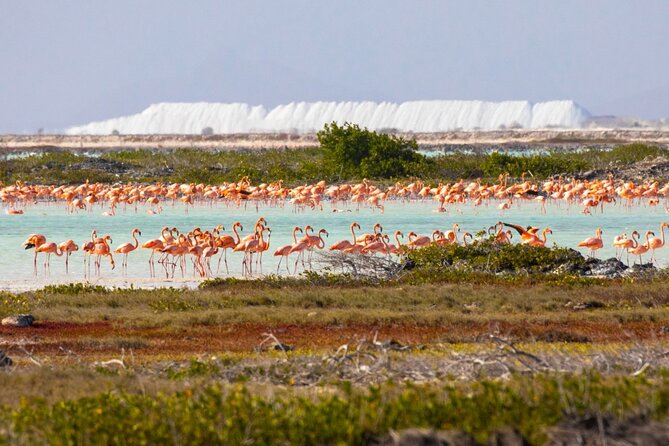
- Flamingos are possible, not guaranteed: Goto Lake and the salt flats are good places to look, but the birds may be far from the road or hidden from view.
- Short stops rule the day: 1,000 Steps, the salt pyramids, the slave huts, and Sorobon Beach may receive only a few minutes each.
- Guides make the difference: Peter, Vanessa, Martin, Martijn, Chela, Eugene, and other local guides are praised for island knowledge and friendly storytelling.
- Van comfort varies: Air-conditioning is offered, but several people found the rear seats cramped or too warm.
- Strong value at $45: You cover a lot of ground for the price, provided you want an overview rather than a relaxed beach day.
Why this tour works as a first look at Bonaire
Bonaire is not an island you understand from the port alone. Kralendijk is pleasant and easy to walk, but the island’s character unfolds outside town, where cactus scrub, salt ponds, old plantations, and quiet coves stretch along the roads.
This tour is designed for that first look. You do not settle into one attraction for long. Instead, you keep moving, stopping for photographs and brief explanations. That makes the excursion useful on a cruise stop, when your time is limited and you want to see more than the waterfront.
At $45 per person, the value is clear if you compare it with arranging several taxis or renting transport for the day. The driver, guide, bottled water, port pickup, and return are included. You also get a local explanation of what you are seeing, which matters on an island where salt production, slavery, plantation life, and conservation are closely tied together.
The tradeoff is depth. This is an overview, not a slow cultural tour. You should book it expecting a broad introduction, not long beach time, a full museum visit, or a guaranteed close-up view of flamingos.
A few more shore excursions around the world worth a look
- FOR CRUISERS: Skip The Lines PRIVATE EPHESUS TOUR &On Time Return
★ 5.0 · 8,527 reviews - Top Choice For Cruisers: Ephesus, Mary’s House WITH TICKETS+LUNCH
★ 5.0 · 7,233 reviews - PRIVATE EPHESUS TOUR FOR CRUISERS: On-time Return and Skip-Line
★ 5.0 · 5,807 reviews
Leaving Kralendijk for the northern coast
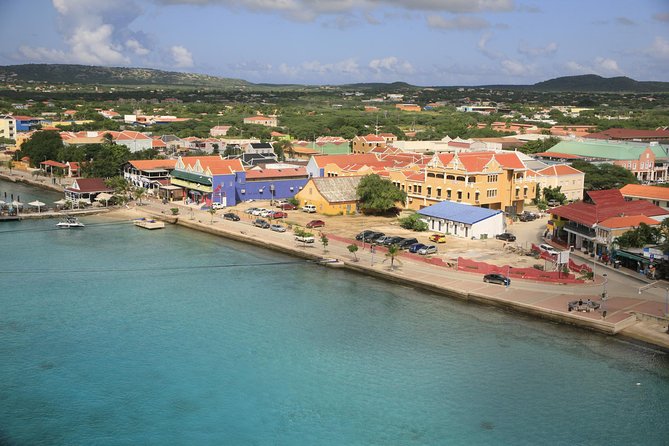
After pickup near the cruise port, the vehicle passes through Kralendijk and heads north. Your guide points out city landmarks and explains parts of modern Bonaire as you leave the capital behind.
The ride itself is part of the tour. The island is compact enough to cross in a few hours, but there is still plenty of driving between stops. A good guide uses that time well, explaining local customs, the island economy, history, and the places ahead.
Guides named Peter, Vanessa, Martin, Martijn, Chela, and Eugene have all been singled out for clear commentary, humor, and a willingness to answer questions. Chela has also provided the tour in Spanish. Since the guide is both driver and narrator, your experience depends heavily on who is assigned and how full the vehicle is.
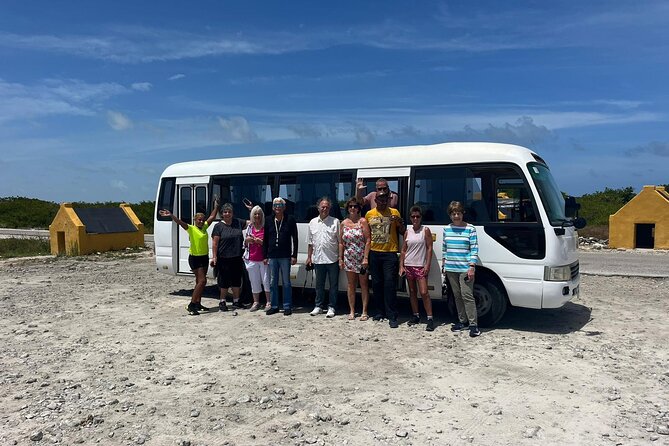
The group limit is listed as 60 people, but the actual vehicles used on many departures are smaller vans, including Toyota Hiace vehicles. Some groups have been small, while others have included seven, eight, or even 12 people. Ask about the expected vehicle if space matters to you, especially if you dislike sitting in a rear row.
1,000 Steps: a famous view with a misleading name
The first major stop is 1,000 Steps, a white beach tucked below limestone cliffs. The name is playful rather than exact, but the staircase is steep enough to require care.
The cove is made of pale sand and bleached coral. Clear, shallow water makes it a known snorkeling and diving area, and sea turtles are often seen nearby. One group spotted a turtle during the short visit, though wildlife is never promised.
The listed stop is only about five minutes, so do not expect a long swim or an extended climb down to the water. The visit is mainly for the viewpoint, the cove, and a quick photograph. If you have limited mobility, remember that the staircase and repeated van entry and exit can be demanding.
This is one place where the tour’s schedule may disappoint you. A longer stay at 1,000 Steps has appeared in the advertised material, but the practical itinerary gives only a brief stop because the tour must still reach the north and south sides. You get the sight, not a beach afternoon.
Goto Lake and the search for wild flamingos
Goto Lake is one of the tour’s best natural stops. This saltwater lagoon is a favored area for Bonaire’s pink flamingos, and the access road passes through thick cactus country before reaching an observation area.
The guide may stop when flamingos appear near the road. Silence helps. Sudden noise can send them farther away, and the birds may be moving between feeding areas. You might see a few birds nearby, or a larger group at a distance. Some visitors see many flamingos, while others find only scattered birds.
That unpredictability is worth understanding before you book. Bonaire protects its wild flamingos rather than keeping them in an arranged display. The birds can be far from the road, and their main nesting area is protected in the middle of the salt flats. Bring patience, keep your camera ready, and do not expect every photograph to show a flamingo filling the frame.
Goto Lake also gives you views toward Washington Slagbaai National Park. You may see donkeys and other island wildlife along the route, adding to the feeling that you have left the built-up part of Bonaire behind.
Same port, a different day ashore:
- From the Port of Kos: Full Day Boat Cruise to 3 Islands
★ 4.8 · 5,137 reviews - Hilo Shore Excursion: Volcanoes National Park & Black Sand Beach
★ 4.5 · 2,338 reviews - Daintree Rainforest, Mossman Gorge Small-Group from Port Douglas
★ 5.0 · 2,326 reviews - Arrecife: Timanfaya and Green Lagoon for Cruise Passengers
★ 4.6 · 2,010 reviews
Rincon and the island’s Spanish beginnings
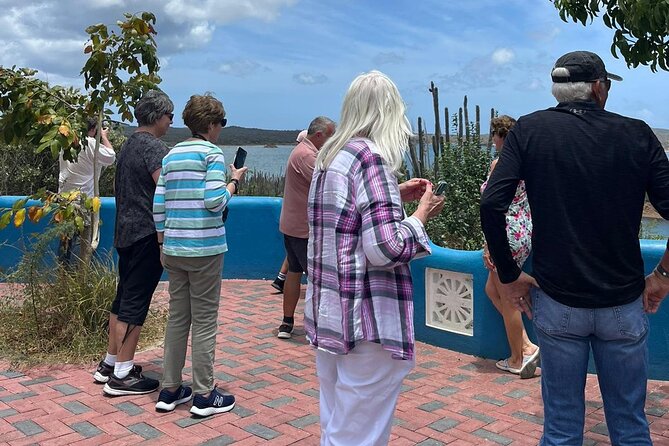
The road continues to Rincon, known as Bonaire’s oldest village. The settlement was established by the Spanish in the early 16th century and grew in a protected inland location.
This stop adds useful context to the natural sights. Bonaire is not just beaches and salt ponds. Its villages reflect the island’s long connection to European powers, plantation life, religion, agriculture, and trade. Your guide explains the setting and the village’s role in the island’s story.
The tour does not give you an extended walking visit through Rincon. Think of it as a narrated pass through an important place, with possible brief stops depending on the day’s timing.
Cadushy Distillery or Museo Chich’i Tan
One unusual feature of the outing is the choice between the Cadushy Distillery and Museo Chich’i Tan. The distillery produces cactus liqueur, described as the world’s only cactus liqueur, and a short visit may include an explanation of the process and a sample.
The important word is may. The tour does not always stop at the distillery. The guide and group may visit the museum instead, often in consultation with participants. Several people expected the distillery but found that the museum was used as the cultural stop.
Museo Chich’i Tan occupies a roughly 200-year-old house and displays old musical instruments, tools, pottery, and household objects connected with life in the 1800s. At about 15 minutes, it is a quick look rather than a full museum visit, but it gives the tour a human scale.
If cactus liqueur is your main reason for booking, confirm the plan before departure. If you are happy with either a local product stop or a small museum, the flexibility works well. The description should not be read as a guarantee that both places will be visited.
Salt pyramids and the hard history of the south
The southern section is where Bonaire’s industrial past becomes most visible. At Pekelmeer, the salt flats form broad pools of pale and pink water, with large white salt pyramids gathered for export.
Salt once drove much of Bonaire’s economy. The ponds still operate, so you may see the working side of salt production rather than a preserved historic site alone. The bright colors and geometric shapes make this one of the island’s strongest photo stops.
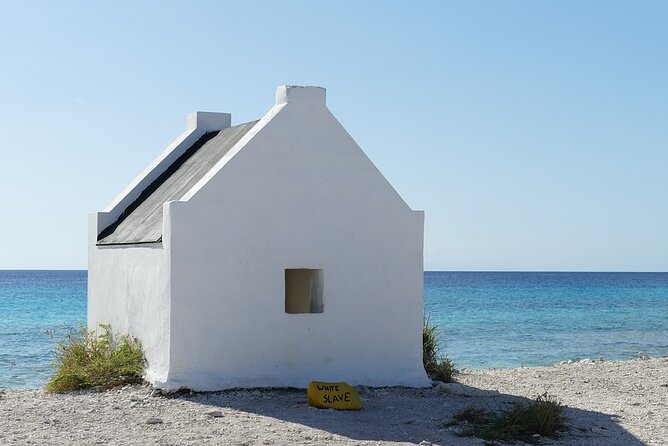
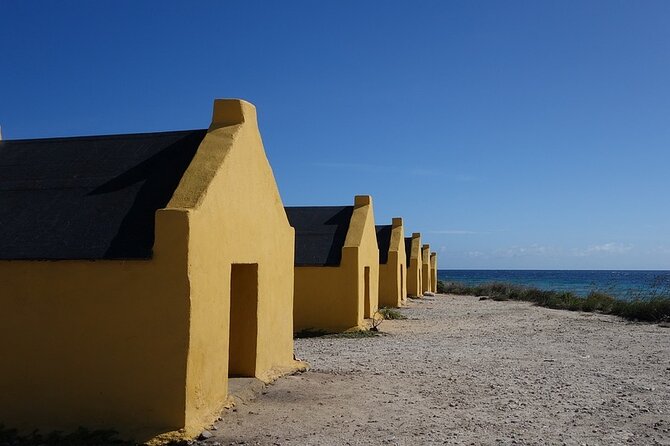
The salt flats also carry a painful history. Enslaved Africans worked in the salt pans and on plantations until slavery was abolished in the Dutch Caribbean in 1863. The small stone slave huts at White Pan were used as basic sleeping quarters for workers who stayed near the salt pans during the workweek.
The huts are stark and tiny. That is precisely why the stop matters. A guide who explains the working conditions can turn a quick photograph into a better understanding of what the salt industry required from the people forced to sustain it.
The stop at the salt pyramids is about 10 minutes, and the visit to the huts may be only five. You will not have time for a long historical discussion, so use the driving time to ask questions.
Willemstoren and Sorobon Beach
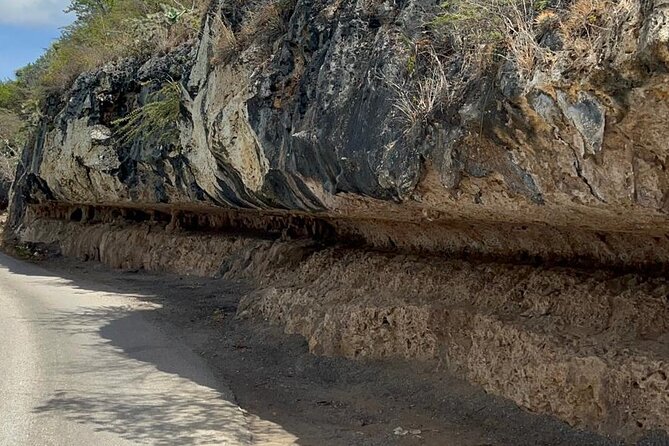
Near the southern tip, you may see Willemstoren, also called Lacre Punt. It is Bonaire’s first lighthouse and is not open to the public. The view is mainly a roadside look, but the lighthouse helps mark the island’s maritime past.
The final listed stop is Sorobon Beach, where the tour makes a quick visit of about five minutes. This is not enough time for a proper beach stay, swim, or long walk. If you want to remain there, the guide can explain how to get back, but you should not assume that staying behind will be convenient during a cruise day.
This stop has caused confusion because some people choose the tour specifically for Sorobon. The tour’s central promise is seeing the north and south sides, not spending an hour at one beach. If Sorobon is your priority, ask before setting out how much time is planned and how returning to the ship would work.
The vehicle is the main practical question
The transport may be air-conditioned or open-air depending on the season. Air-conditioning has been a major plus on comfortable departures, but it has not worked perfectly every time. Some people found the van hot at the start, while others said the air-conditioning reached the front seats more effectively than the rear.
Space is another concern. A 12-seat van can feel tight when it is full, particularly for tall adults or anyone seated in the back. You may need to climb into a rear seat and step in and out several times during the tour. The vehicle may be perfectly acceptable for a small group and much less pleasant when every seat is occupied.
For the best chance of comfort, arrive ready to board promptly and ask where the vehicle will meet you. Port pickup has generally been straightforward, but the meeting area can be busy, and the exact stand or pinned location has caused confusion for some people.
The operator requires at least four people per booking and can carry up to 60 people across the available vehicles. Cruise passengers need to provide the ship name, docking time, disembarkation time, and re-boarding time. That information helps the operator match the tour to the ship schedule.
Who will enjoy this three-hour route?
I would choose this tour if you are visiting Bonaire for the first time and want to understand the island’s layout quickly. It is also a good fit if you want a mixture of wildlife, history, photographs, and local commentary rather than a single activity.
It suits cruise passengers who value a planned return to port. The schedule is tight, but that structure reduces the temptation to linger too long at one stop and risk a stressful trip back to the ship.
Families can participate, though children must be accompanied by an adult. Most people can take part, but the steps at 1,000 Steps and the repeated climbing in and out of the van may be awkward for anyone with mobility concerns.
I would look elsewhere if you want long snorkeling time, a guaranteed distillery tasting, a leisurely museum visit, or a guaranteed close view of flamingos. You should also think twice if a crowded van or unreliable air-conditioning would spoil your day.
Free cancellation is available up to 24 hours before the start time. Within 24 hours, changes and refunds are not accepted. The tour also requires a minimum number of participants, so a cancellation for low enrollment may result in another date, another experience, or a full refund.
Should you book North and South Sides of Bonaire?
For $45, this is a good-value introduction to Bonaire. You see far more than you would by staying around Kralendijk, and the best guides add real value by explaining the island’s history, salt industry, villages, wildlife, and customs.
Book it if your goal is a broad first impression. Go in expecting short stops, changing wildlife sightings, and a vehicle that may be snug. If you can accept those limits, this tour gives you a useful three-hour portrait of Bonaire, from sea turtles and cactus country to flamingos, salt pyramids, and the small huts that reveal the island’s difficult past.
FAQ
How long is the North and South Sides of Bonaire tour?
The tour lasts approximately three hours and ends with drop-off at the cruise port.
Does the tour pick up cruise ship passengers?
Yes. Cruise port pickup and drop-off are included. Cruise passengers must provide their ship name, docking time, disembarkation time, and re-boarding time when booking.
Will I definitely see flamingos?
No. The tour visits Goto Lake and the salt flats, where flamingos may be seen, but the birds can be far away or moving between areas. The guide may make extra roadside stops when flamingos are spotted.
Is the cactus liqueur tasting guaranteed?
No. The group may visit either the Cadushy Distillery or Museo Chich’i Tan, depending on the arrangements made with the guide and participants.
Is the vehicle air-conditioned?
The vehicle may be air-conditioned or open-air depending on the season. Air-conditioning has been reported on many departures, but comfort can vary by vehicle and seat location.
What is included in the price?
The $45 price includes the driver-guide, bottled water, cruise port pickup, and drop-off. Food and other drinks are not included.
Just added around the world
- Florence and Pisa Exploration from Livorno Cruise Port★ 4.0 · 3 reviews
- Private Shore Excursion Livorno Port “Discovery Pisa & Florence”★ 5.0 · 16 reviews
- Deluxe Florence and Pisa Tour from Livorno Cruise Port★ 4.5 · 32 reviews
- Florence and Lucca Shore Excursion from Livorno Port★ 5.0 · 2 reviews
- Private VIP Exclusive Tour of Cinque Terre – Shore Excursion from Livorno/Spezia★ 3.5 · 2 reviews
- Florence Hop On Hop Off Shore Excursion from Livorno★ 4.0 · 28 reviews
- Cinque Terre Shore Excursions from Livorno Port★ 4.5 · 33 reviews
- Day Tour in Livorno and Pisa Shore Excursion from Livorno★ 4.0 · 3 reviews
Tours, compared.
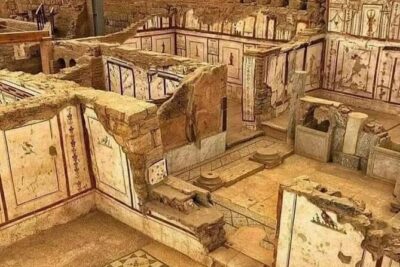
Skip The Lines PRIVATE EPHESUS TOUR &On Time Return
Read our review →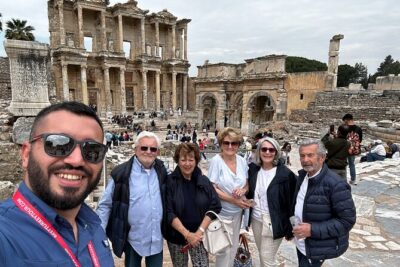
PRIVATE EPHESUS TOUR FOR CRUISERS: On-time Return and Skip-Line
Read our review →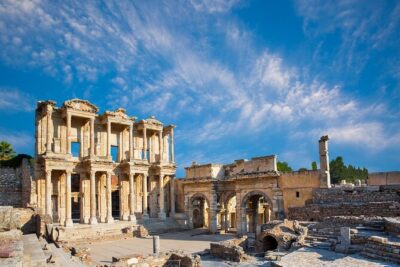
PRIVATE TOUR FOR CRUISERS: Mary’s House (Meryemana) and Ephesus
Read our review →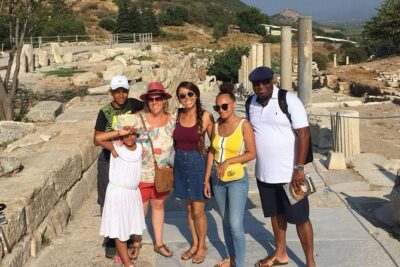
Ephesus & Artemis Tour for Cruisers WITH ENTRY TICKETS
Read our review →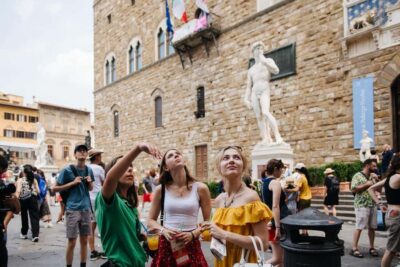
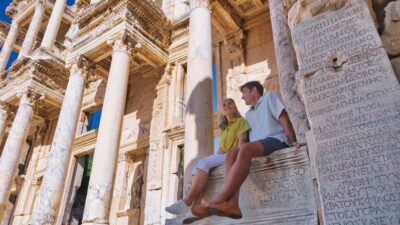
Ephesus: Small Group Tour for Cruise Passengers
Read our review →