
REVIEW · LIVERPOOL
Liverpool Heritage,History & Culture Walking Shore Excursion
Liverpool’s best stories are packed into a walkable route: a vanished medieval castle, docks tied to global trade, the Titanic connection, grand civic buildings, and the Beatles’ old stomping ground. This two-hour walking tour links those pieces without sending you back and forth across the city.
I like the easy starting point at the cruise welcome area and the mix of famous sights with less obvious history. I also like that the guides use personal stories rather than simply pointing at buildings and reciting dates. The main drawback is the pace: two hours gives you a useful introduction, but not enough time for long museum visits or detailed interior tours.
The walk is wheelchair accessible and suitable for strollers, though cobbles and busy public areas can slow you down. One guide took special care with a deaf guest, speaking slowly and addressing him directly, which suggests that clear communication can be requested when you meet your guide.
Key points to know before you book
- A cruise-friendly route: Meet your guide inside the white cruise welcome building after leaving the ship, so there is no need to find a distant city meeting point.
- Liverpool’s waterfront in one sweep: See the Royal Albert Dock, the Titanic connection, and the Three Graces in a compact walking route.
- Music history on Mathew Street: Pass the Cavern Club area and the Beatles Statue while hearing how Liverpool became linked with major musical names.
- More than Beatles nostalgia: Derby Square, Exchange Flags, Liverpool Town Hall, and the old docks add royal, commercial, and civic history.
- Good value for a short introduction: At $31 per person, the tour offers a guided overview for less than the cost of many longer paid attractions.
- Allow for uneven ground: The route is accessible, but cobbles and crowded streets mean sturdy shoes and a little patience will help.
Starting beside the cruise ship
The meeting point is unusually convenient for a shore excursion. After you disembark, walk up the covered ramp into the white cruise welcome building. Your guide will be wearing purple and holding a welcome sign for Liverpool Famous Walking Tours.
That detail matters. A short port visit can quickly lose time if you need a taxi, train, or complicated walk just to reach the guide. Here, the tour begins where your ship arrives, and the route continues on foot into central Liverpool.
The guide speaks English, and the company supplies local Liverpool guides. Group size can vary. One booking had only two people, turning the outing into a private-style walk without a separate private-tour price. You should not count on having a tiny group, but a smaller party would allow more questions and a more flexible pace.
Because the tour lasts two hours, wear shoes that can handle pavement and cobbles. The route is suitable for wheelchairs and strollers, but access does not mean every surface is smooth. You will also pass through busy public areas, so keep personal belongings close and allow extra time if someone in your party walks slowly.
More History Excursions in the UK:
- Invergordon Cruise Excursion – Castle ,Whisky and History Tour
★ 5.0 · 37 reviews - Liverpool Heritage, History, Culture Walking Tour-Shore Excursion
★ 4.5 · 21 reviews - Kona Shore Excursion: Sea Turtles, Historic Kona & Coffee
★ 4.5 · 324 reviews
Derby Square and the castle that disappeared
One of the more interesting early stops is Derby Square. Today, the square is marked by an imposing monument to Queen Victoria, but the guide explains that Liverpool Castle once occupied this area.
That contrast gives the walk its historical shape. Liverpool is not only a collection of grand nineteenth-century buildings. Parts of the city’s earlier story have vanished, leaving behind changed streets, monuments, and fragments of memory. A guide can connect those layers in a way that a quick solo walk may not.
You also hear about Liverpool from the time of King John through to the modern city. That broad time span is useful, though it also explains why the tour cannot treat every period in detail. Think of this stop as a clear introduction to the city’s early political and civic development, not a full medieval history lesson.
The first dry dock and Liverpool’s seafaring past
The route then reaches a location associated with Liverpool’s first dry dock. A large water fountain marks the maritime story here, offering a simple visual reminder that the city grew through its relationship with the sea.
This is also where the tour addresses Liverpool’s role in the slave trade. That subject is essential to understanding the city’s wealth and trading networks, and it should not be left out of a pleasant waterfront stroll. You get the chance to place the port’s success within a wider and more difficult history.
The discussion also covers the docks’ part in the city’s development. Liverpool’s waterfront was not merely a backdrop for ships. It shaped jobs, trade, architecture, and the city’s place in the world. If you want a detailed account of individual merchants, ships, or archival records, two hours will feel brief. If you want the key context before exploring farther, this stop does useful work.
Near here, you can also see the large LIVERPOOL selfie sign. Its colors change with the season or special events, so it gives you an easy photo stop and a quick sense of the city’s modern public identity.
Royal Albert Dock and the Titanic connection
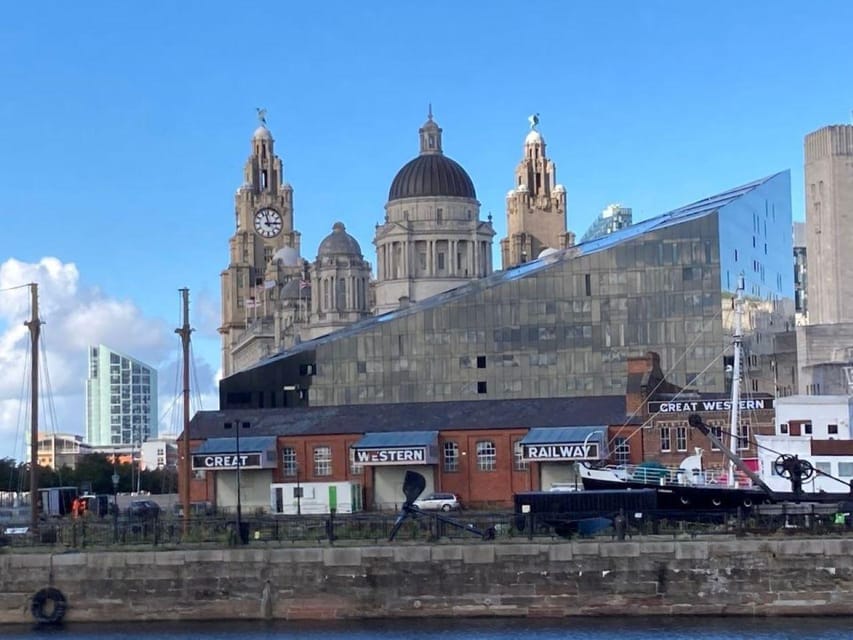
The walk continues around the waterfront to Royal Albert Dock, one of Liverpool’s most recognizable areas. The dock’s restored buildings make it one of the easiest places to understand how the port shaped the city’s appearance.
Your guide explains the role the docks played in Liverpool’s growth and the way the Titanic story became part of the city’s maritime memory. Liverpool was closely tied to the ship through its port and company connections, and that link still forms part of the waterfront story.
Royal Albert Dock is also a practical place to orient yourself. The open water, large brick buildings, and broad paths give you a clear sense of how the port worked. You will see the setting rather than enter a dedicated museum as part of the advertised walk, so anyone wanting a detailed Titanic presentation should plan separate time.
I like this part of the route because it joins architecture and human stories. You are not simply looking at old warehouses. You are hearing how dock activity helped make Liverpool prosperous, while also confronting the less comfortable sources of that prosperity.
More Walking Excursions in the UK:
- Beatles Famous Walking Tour Of Liverpool-Shore Excursion
★ 5.0 · 50 reviews - Beatles Famous Walking Tour Of Liverpool-Shore Excursion
★ 4.8 · 5 reviews - Juneau Shore Excursion: Helicopter Tour and Guided Icefield Walk
★ 5.0 · 536 reviews - Sydney Shore Excursion: Sydney Opera House Walking Tour
★ 4.5 · 160 reviews
The Three Graces beside the Mersey
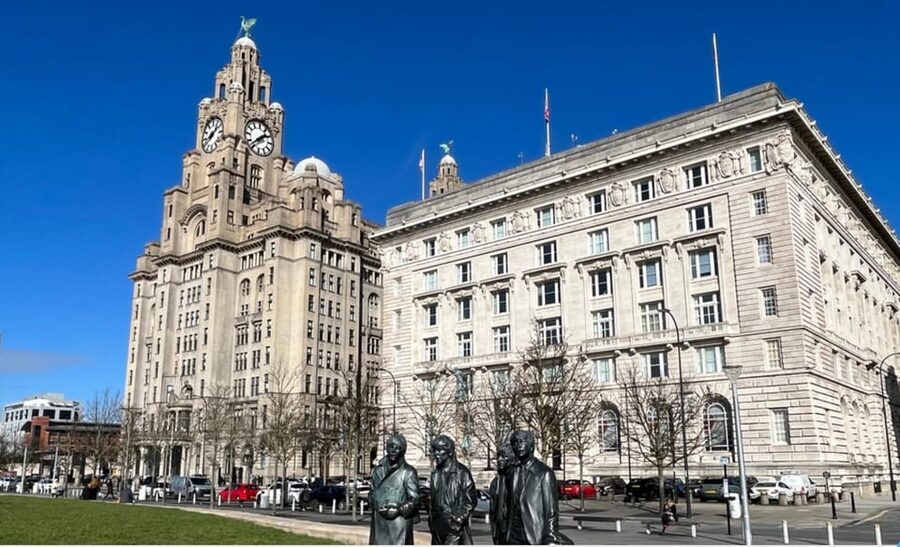
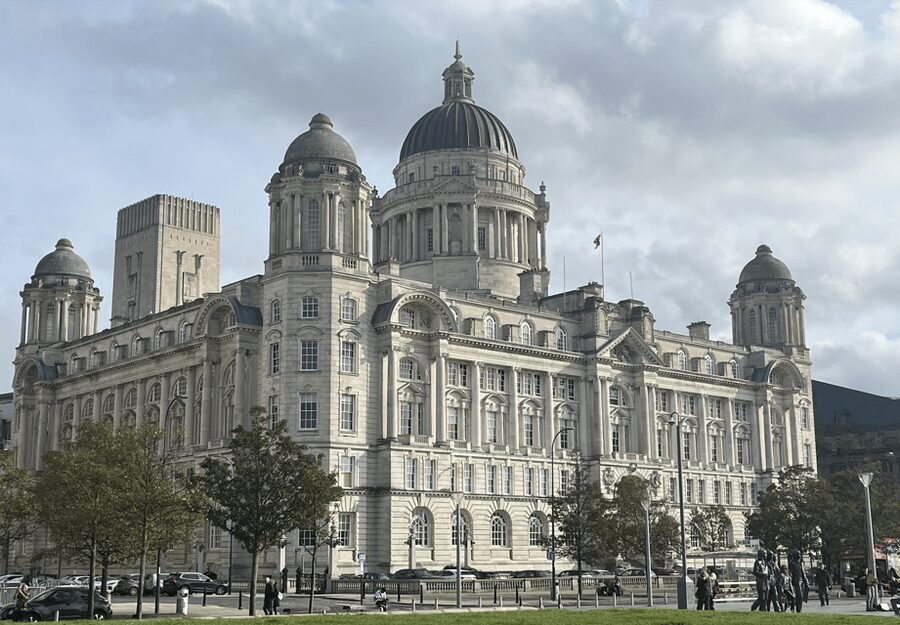
The Three Graces are the tour’s grandest architectural group: the Cunard Building, the Port of Liverpool Building, and the Liver Building. All three are Grade II listed, and together they create the image most people associate with Liverpool’s waterfront.
The buildings served different commercial and civic purposes, but from the riverside they read as one powerful composition. Your guide explains their history and heritage while you take in the details from outside. The scale is impressive, yet the real value comes from learning why these buildings were placed here and what the port meant to the companies that used them.
The Liver Building is especially important to Liverpool’s identity, but the tour treats the trio as a group. That is sensible. The Three Graces make more sense when you compare their forms and roles rather than photograph one façade in isolation.
This is a strong part of the walk for photography, though the waterfront can be exposed and busy. Keep your schedule in mind if your ship has a firm departure time. The tour returns you to the city rather than taking you back aboard, so you will need to make your own way to the ship after the walk.
Exchange Flags and Liverpool Town Hall
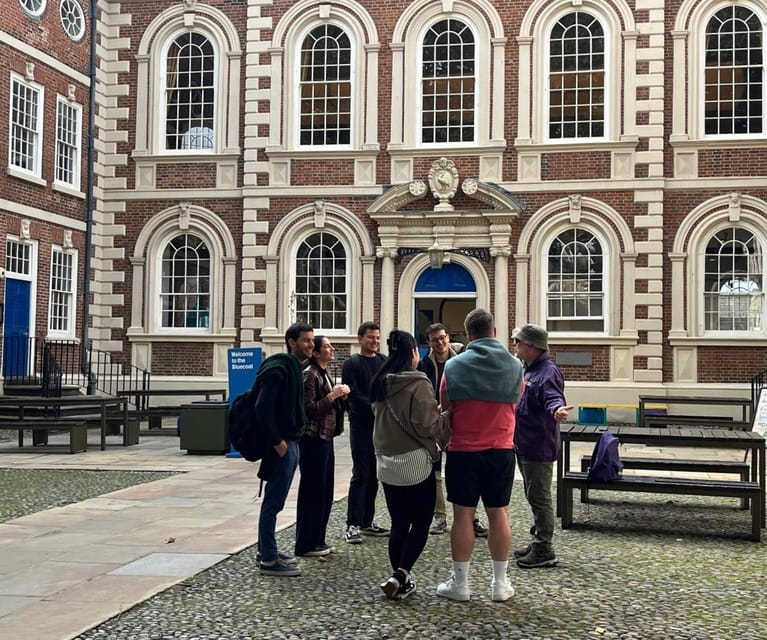
At Exchange Flags, the Grade II listed buildings form a courtyard facing Liverpool Town Hall. The space offers a change of mood from the open waterfront. Here, commercial power and civic pride come together in a more enclosed urban setting.
The route then brings you toward the current Liverpool Town Hall, a Grade I listed building recognized as one of England’s finest surviving eighteenth-century town halls. The guide also explains the history of earlier town halls, reaching back to the 1500s.
This is the sort of information that makes a guided walk worthwhile. You can admire a handsome building on your own, but the succession of earlier civic buildings gives it more meaning. Liverpool’s government, trade, and public ceremonies did not begin with the present structure, and the guide helps you see the town hall as part of a longer story.
The itinerary emphasizes outside views and street-level explanation. You should not expect an interior tour of the town hall unless the guide specifically confirms otherwise. That limitation is easy to accept if your goal is an overview, but important if grand interiors are your main reason for booking.
Mathew Street, the Cavern Club, and the Beatles Statue
Mathew Street changes the tone again. This is Liverpool’s best-known music street and the area most closely linked with the Cavern Club and the Beatles.
The walk passes by the Cavern Club rather than promising a performance or a full club visit. You hear about the musical figures connected with the street and walk in the footsteps of the Fab Four. The setting is compact, lively, and full of music-themed references, so it is one of the more playful parts of the tour.
You also get a chance to take a photograph with the Beatles Statue, sculpted by Andrew Edwards. It is an easy photo opportunity, especially for anyone making a first visit to Liverpool. The statue also gives the guide a natural opening to explain how the city’s music identity became part of its modern culture.
I appreciate that the route does not rely only on Beatles fame. Liverpool’s music story is a major reason people come, but it works best here as one chapter in a larger city tour. If you want a dedicated Beatles pilgrimage, you will need more time and a separate experience. If you want to add the Cavern Club area to a port-day introduction, this section does the job.
Mathew Street can be crowded and noisy. Keep close to the group, particularly if you are managing children, a wheelchair, or a dog. Well-behaved dogs are welcome, but the busy streets and uneven surfaces may make the walk less relaxed for some pets.
What the $31 price gets you
At $31 per person, this is a reasonable price for a two-hour guided introduction, especially when you are arriving by cruise ship and want a simple plan. The fee covers a local English-speaking guide and the walking tour itself. Food and drinks are not included.
The value depends on what you want from your port visit. You are paying for a route, local explanation, and help connecting Liverpool’s landmarks into one story. You are not paying for museum admission, a meal, transport, or a long specialist tour.
For a first look at the city, I think the price works well. You can see several major areas in a short time and return later to the places that catch your interest. If you already know Liverpool well, or want to spend much of your day inside museums, you may prefer to explore independently.
The strongest value comes from the range of subjects covered: King John, the lost castle, the slave trade, the first dry dock, Titanic, the Three Graces, the town hall, the Cavern Club, and the Beatles Statue. No single stop receives a huge amount of time, but the variety is considerable for a short walk.
Pace, access, and communication
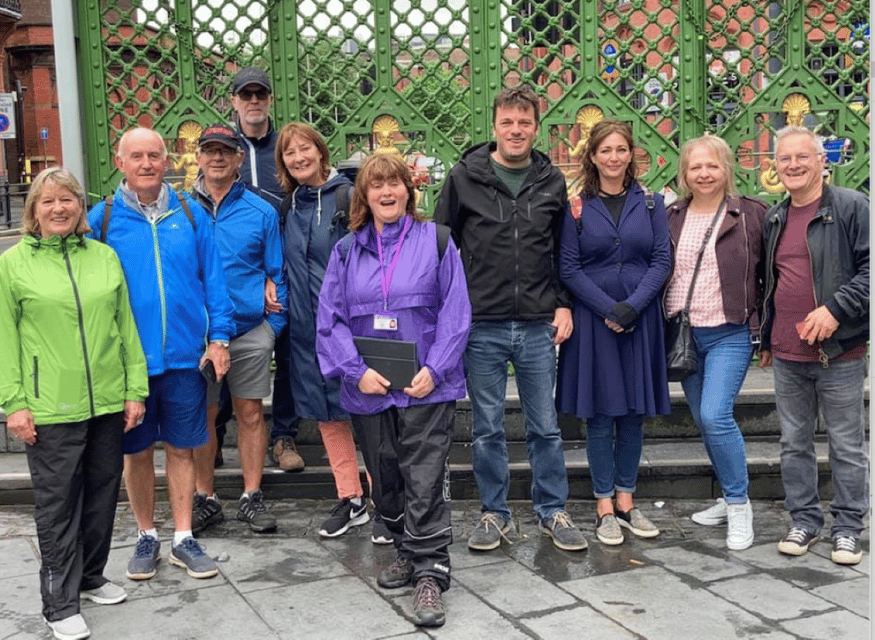
The tour is described as an easy walking experience, but easy does not mean entirely smooth. You will cross uneven surfaces, including cobbles, and move through crowded areas. Wheelchair users and people with strollers can take part, but a companion may need to help with positioning and pace.
A useful sign is the account of a guide who slowed down for a deaf guest, spoke carefully for interpretation, and addressed him directly. That is not a guarantee about every guide or group, but it is sensible to explain your communication needs at the start.
The route suits adults, older children, cruise passengers, and anyone who wants a broad introduction before exploring alone. It may be less suitable if you need frequent long rests, dislike city crowds, or want extended time at each landmark.
You can also bring a well-behaved dog. Since the route includes busy areas and a group setting, consider your dog’s comfort rather than treating the welcome as a promise of a relaxed stroll.
Should you book the Liverpool Heritage, History and Culture Walking Shore Excursion?
Book it if you want a compact, well-organized first look at Liverpool from the cruise port. The route gives you the Three Graces, Royal Albert Dock, civic buildings, maritime context, Beatles landmarks, and the Cavern Club area without requiring transport.
I would especially recommend it for first-time visitors, short port calls, and anyone who prefers local stories to a hop-on, hop-off overview. The guide’s ability to adjust communication is another encouraging point for guests who need information delivered more slowly or clearly.
Skip it if you want interior access, museum time, a dedicated Titanic tour, or a full Beatles day. For those goals, this walk works better as an introduction than a complete Liverpool experience. At $31, it is a sensible way to get your bearings and decide where to spend the rest of your time.
FAQ
Where does the Liverpool walking tour meet?
Meet your guide after leaving the cruise ship, walking up the covered ramp into the white cruise welcome building. The guide will wear purple and hold a welcome sign for Liverpool Famous Walking Tours.
How long does the tour last?
The walking tour lasts two hours. Starting times vary, so check availability when booking.
What language is the tour conducted in?
The tour is conducted in English with a live English-speaking guide.
Is the walking tour wheelchair accessible?
Yes, the locations are accessible for wheelchairs and strollers. However, the route includes cobbles, uneven surfaces, busy areas, and group walking.
Are dogs allowed on the tour?
Well-behaved dogs are welcome. Keep in mind that the route passes through busy areas and includes uneven surfaces.
Is food or drink included?
No. Food and drink are not included in the $31 price.
Can I cancel the tour for a refund?
Yes. You can cancel up to 24 hours in advance for a full refund. You can also reserve now and pay later.
Just added around the UK
- Ultimate Ticket To Ride Beatles Half-Day Shore Excursion- Private★ 5.0 · 6 reviews
- Shore Excursion: Lake District Adventure Sightseeing Day Trip from Liverpool★ 4.0 · 5 reviews
- Liverpool Heritage, History, Culture Walking Tour-Shore Excursion★ 4.5 · 21 reviews
- Liverpool to Wales Shore Excursion with Conwy Castle★ 4.0 · 10 reviews
- Shore Excursion Kirkwall Small Group Highlights of Orkney★ 5.0 · 5 reviews
- Full-Day shore excursion-★ 5.0 · 2 reviews
- Scottish Whisky Distillery & Fairytale Dunrobin Castle★ 4.5 · 50 reviews
- Full-Day Outlander Experience (inc Invergordon Cruise Port)★ 5.0 · 16 reviews
Liverpool Shore Excursions, compared.

Ultimate Beatles Ticket To Ride Shore Excursion-Small Groups
Read our review →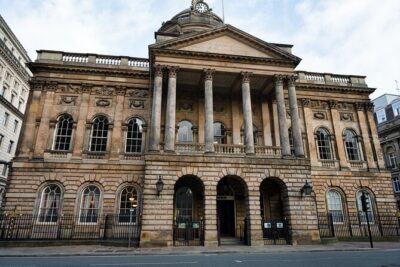
Beatles Famous Walking Tour Of Liverpool-Shore Excursion
Read our review →
From Liverpool: North Wales Sightseeing Tour Shore Excursion
Read our review →
Shore Excursion: North Wales Adventure Sightseeing Day Trip from Liverpool
Read our review →
Liverpool Heritage, History, Culture Walking Tour-Shore Excursion
Read our review →
From Liverpool: Chester Sightseeing Half-Day Shore Excursion
Read our review →
Liverpool to Wales Shore Excursion with Conwy Castle
Read our review →
Ultimate Ticket To Ride Beatles Half-Day Shore Excursion- Private
Read our review →Browse the lists this tour appears in