
REVIEW · PRIVATE
Kusadasi: Pamukkale Private Tour for Cruise Passengers
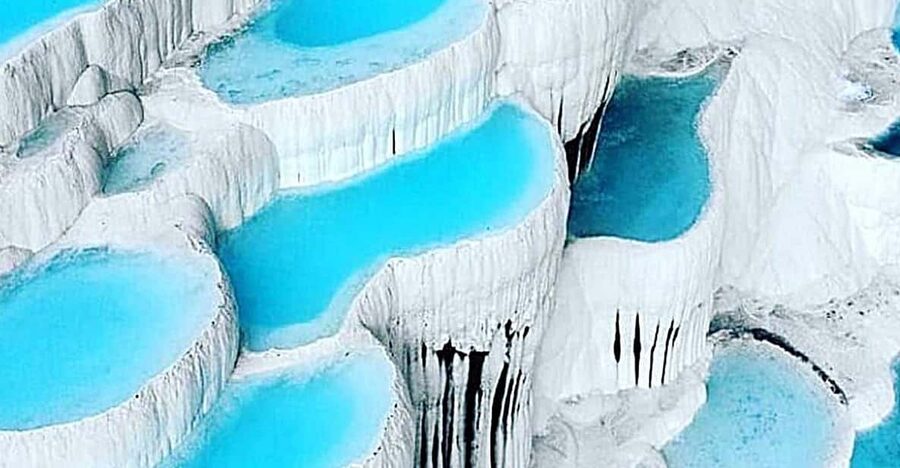
Pamukkale gives you two remarkable sights in one day: gleaming mineral terraces shaped by hot springs and the extensive Roman ruins of Hierapolis above them. The setting is unusual even by Turkey’s high standards, with ancient streets, tombs, theaters, and thermal water sharing one hilltop site.
I like the private format, which lets you tour the ruins with a guide and then set your own pace. I also like the choice between simply viewing the terraces and paying extra to swim at Cleopatra Pool, where fallen ancient columns sit in the water. The drawback is the long road day, with roughly three hours in the van on the return journey and entrance fees added to the tour price.
Key points at a glance
- Hierapolis comes first in the guided portion, with the Grand Theatre, Temple of Apollo, Plutonium, Christian Basilica, Necropolis, and Martyrium of St. Philip.
- Pamukkale’s white terraces offer free time, including the chance to bathe in the thermal water.
- Cleopatra Pool costs an additional 6 euros, and the main Pamukkale and Hierapolis entrance costs 24 euros.
- The 10.5-hour private outing includes air-conditioned transport, parking, VAT, a professional guide, and a Turkey and Hierapolis map.
- Guide Yetkin receives special praise for his kind manner and lunch recommendation, a useful detail for anyone choosing this experience.
- The day involves uneven surfaces and considerable walking, so bring firm, comfortable shoes, water, sunscreen, and a hat.
The long road from Kusadasi to Pamukkale
This is a full shore excursion, not a quick side trip. You leave from Kusadasi or Selcuk and spend about 105 minutes in the van before a 30-minute break at Meandros Dinlenme Tesisleri. After another 75-minute drive, you reach the Pamukkale area.
That travel time matters. From Kusadasi, Pamukkale is too far for a casual morning visit, but the private vehicle makes the trip easier than arranging several separate connections. You have air conditioning, parking, and a guide assigned to your group rather than joining a large coach party.
The day ends with about three hours of driving back to Kusadasi. If you are arriving by cruise ship, confirm the pickup plan carefully. The guide waits at the security gate, or at the lobby if there is no security gate. You should also check the return time against your ship’s all-aboard time before booking.
The roadside break is practical rather than a major attraction. You also stop briefly at Karahayit for photographs and views before reaching Pamukkale. That 10-minute stop breaks up the drive, but the main reason to book this outing remains the archaeological site and hot springs, not the en route sightseeing.
More Private Shore Excursions in Turkey
- FOR CRUISERS: Skip The Lines PRIVATE EPHESUS TOUR &On Time Return
★ 5.0 · 8,527 reviews - PRIVATE EPHESUS TOUR FOR CRUISERS: On-time Return and Skip-Line
★ 5.0 · 5,807 reviews - PRIVATE TOUR FOR CRUISERS: Mary’s House (Meryemana) and Ephesus
★ 5.0 · 1,349 reviews
Why the private format helps at Hierapolis
The guided portion begins at the North Gate of Hierapolis. This is a sensible way to see the site because the ruins cover a broad area and the hot sun can make it hard to understand what you are looking at without context.
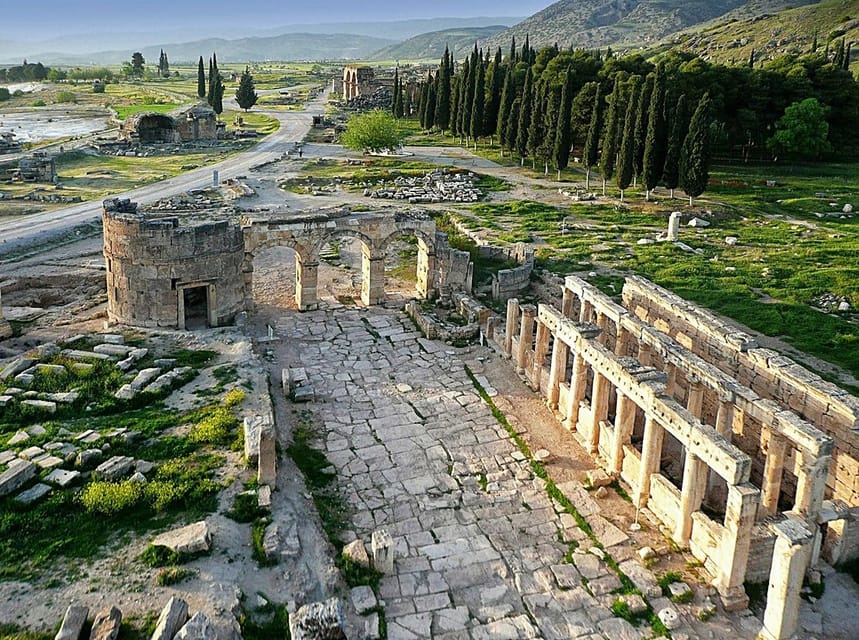
Your guide leads you through the city for about an hour. The route includes the Grand Theatre, Temple of Apollo, Nymphaeum, Plutonium, Christian Basilica, Necropolis, and Martyrium of St. Philip. After that, you get time to explore at your own pace.
I like this balance. A guide can explain the purpose of a building and point out details you might otherwise pass without notice. Then you are free to linger at the views, take photographs, or walk at a slower speed without staying tied to a group schedule.
The private group setup is also useful for families. One verified booking described the day as enjoyable for children, and that makes sense here: the terraces are visually striking, while the ruins offer open spaces and plenty to see. Still, younger children may tire during the walking sections, particularly in summer heat.
Hierapolis, from grand theater to sacred sites
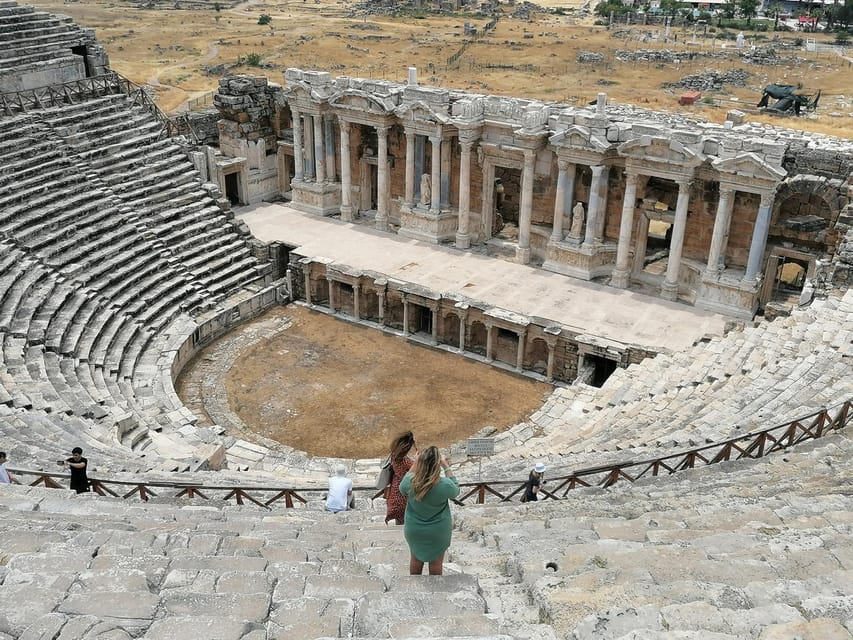
The Grand Theatre is one of the main sights on the route. Your guide explains how it developed into the city’s crown jewel, giving you a clearer idea of Hierapolis as a functioning ancient city rather than a collection of broken stones.
The Temple of Apollo introduces the religious side of the site. It was a sanctuary for Apollo, associated with light and music. Nearby, the Plutonium was once believed to be a portal to the underworld. These places add a darker and more mysterious note to the visit, and they show how sacred spaces shaped daily life here.
The Nymphaeum was a monumental fountain, a reminder that water was central to Hierapolis in both practical and ceremonial ways. Seeing it after learning about Pamukkale’s thermal springs creates a useful link between the natural source and the city built around it.
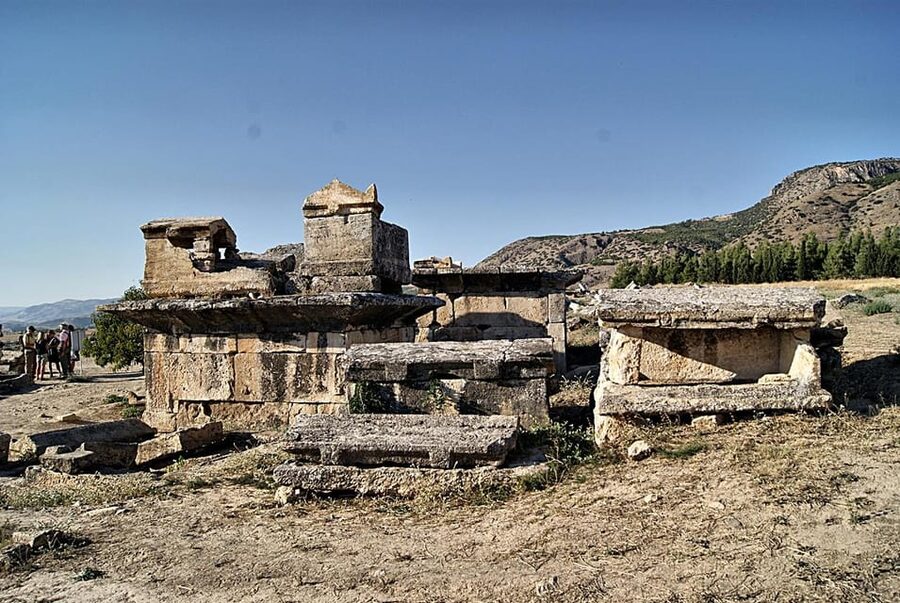
The Christian Basilica adds another layer. Its presence reflects the city’s later religious changes and architectural variety. You also visit the Necropolis, an ancient cemetery that stretches across the area. Tombs and funerary monuments make this one of the quieter parts of the walk, with a strong sense of the city’s long human story.
The Martyrium of St. Philip is the final major stop named in the guided route. It is presented as a place for reflection and has clear significance for Christian visitors. Even if you are mainly interested in Roman sites, the range of buildings helps you see how Hierapolis changed over time.
The ground is uneven, and comfortable shoes are not optional advice here. Bring water, a hat, and sunscreen. The activity information recommends walking shoes because surfaces can be rough, and that is especially important if you plan to continue from the ruins to the terraces.
The white terraces require a slower pace
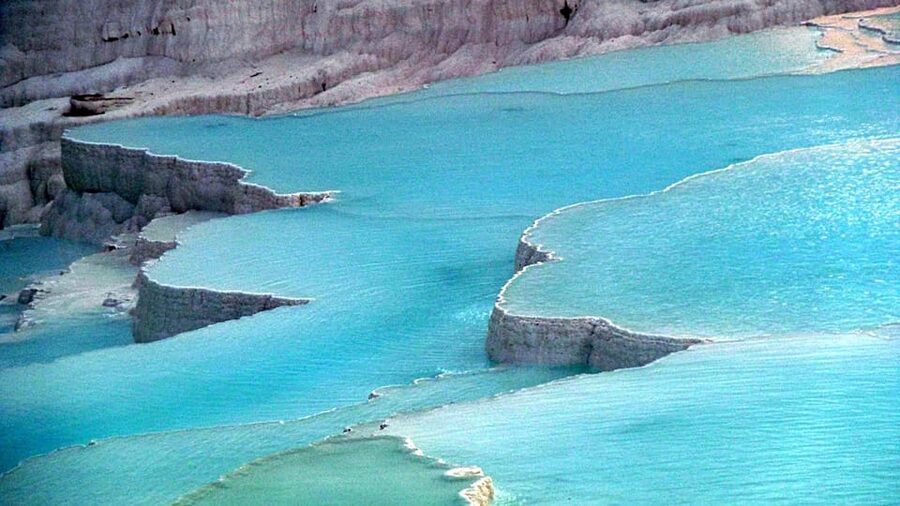
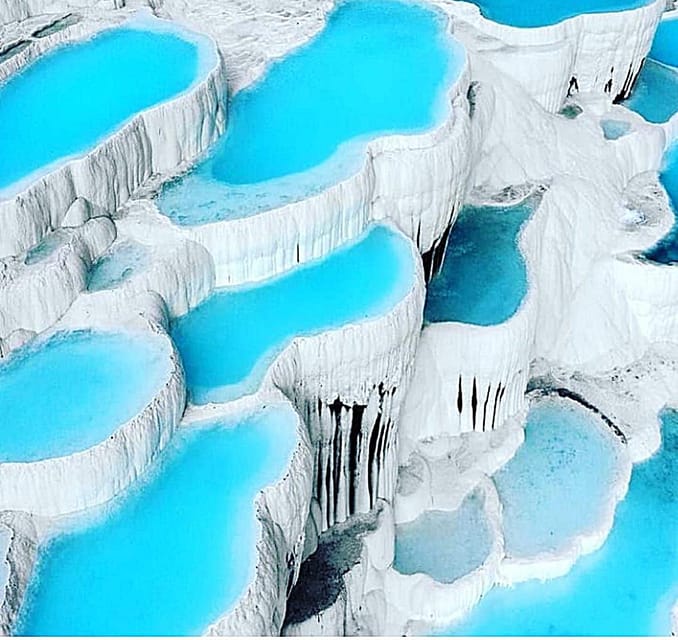
After the guided history tour, you have time to explore Pamukkale independently. The White Travertines are the visual centerpiece: pale limestone terraces formed by mineral-rich thermal water, with shallow pools cascading down the slope.
The appearance changes with the light and with the amount of water flowing across each section. You should expect a bright, exposed setting rather than a shaded park. Sunscreen, a hat, and drinking water will make a real difference.
The tour includes the chance to bathe in the thermal waters of the terraces. Follow the local instructions and take care on the wet surfaces. The combination of bare feet, mineral deposits, and uneven ground can be awkward, so move slowly and keep your belongings secure.
You do not need to spend every free moment in the water. You might prefer to photograph the terraces, look back toward the plain, and walk only where permitted. The self-guided portion is valuable because you can choose how much time to devote to swimming, photos, or the ruins.
The walking time at Pamukkale is listed at about an hour, though the day includes separate sightseeing and free-time periods. Expect the actual experience to feel active rather than passive. You will be walking, changing between archaeological and natural areas, and spending time in direct sun.
Same port, a different day ashore:
- Top Choice For Cruisers: Ephesus, Mary’s House WITH TICKETS+LUNCH
★ 5.0 · 7,233 reviews - ALL INCLUDED: Ephesus Ruins, Mary’s House Tour incl ENTRY TICKETS
★ 5.0 · 1,670 reviews - Top-Rated: Ephesus & Artemis Tour for Cruisers WITH ENTRY TICKETS
★ 5.0 · 1,184 reviews - Ephesus: Small Group Tour for Cruise Passengers
★ 4.8 · 1,100 reviews
Cleopatra Pool costs extra but adds a memorable option
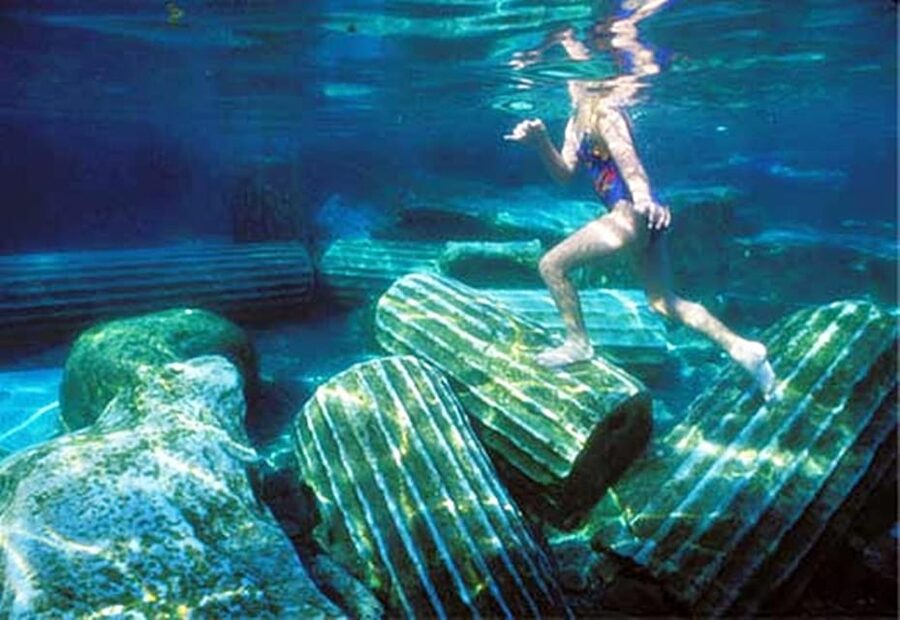
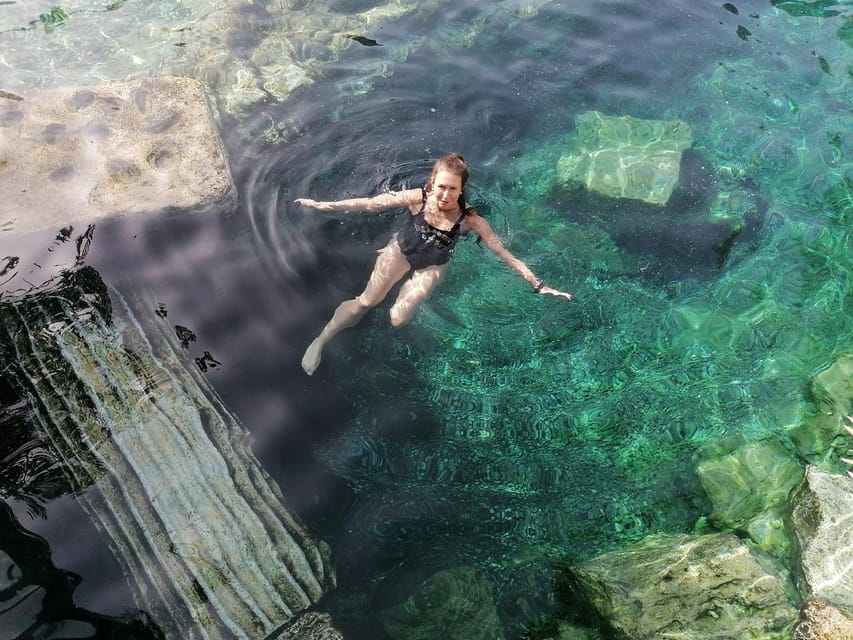
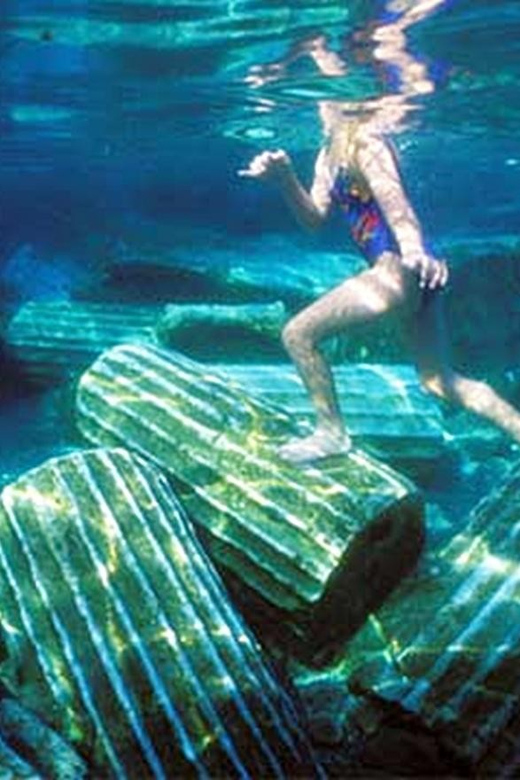
Cleopatra Pool is an optional stop with an additional 6 euro fee for swimming. The pool is known for warm mineral water and submerged ancient ruins, including fallen columns. That combination makes it different from a standard hotel pool or ordinary thermal bath.
You can visit the pool for photos and sightseeing without treating the swim as essential, but I think the option is worth considering if you enjoy thermal bathing. Bring swimwear in your day bag, since changing into a swimsuit after arriving can be inconvenient if you did not plan ahead.
The tour price does not include the Cleopatra Pool fee. The main entrance to Pamukkale and Hierapolis is also separate, listed at 24 euros. Those costs can change the final price noticeably, especially for a family. Add meals, drinks, and personal expenses as well.
What the $260 price really buys
At $260 per person, this is not the cheapest way to see Pamukkale. You are paying for a private group, an air-conditioned minibus, a professional English-speaking guide, parking, VAT, and the convenience of pickup and drop-off in Kusadasi or Selcuk.
The value is strongest for cruise passengers who want a direct shore excursion with less coordination. A private vehicle cuts out the need to arrange transport to the site, and a private group gives you more control over the pace. You also receive a Turkey and Hierapolis map, which is useful during the self-guided section.
The value is weaker if you are trying to keep costs down or already have dependable transport. The 24 euro site entrance and 6 euro pool fee come on top of the advertised price, while lunch and drinks are not included.
Lunch is part of the Pamukkale stop, but the meal itself is not included in the tour price. Guide Yetkin was specifically praised for taking a group to a good lunch spot, so the guide may help you choose a practical place. Still, you should budget separately for the meal and carry water for the day.
Timing, walking, and who should book
The full duration is 10.5 hours. That gives you enough time to see both Hierapolis and Pamukkale, but it leaves little room for an unplanned delay. The private format helps, yet the distance from Kusadasi remains the same.
I would recommend this tour to you if you want the major sights in one organized day, prefer a private group, and value having a guide for the archaeology. It is also a good fit if you want both structured explanation and free time, rather than a guide beside you for every minute.
Families can enjoy it, and the activity is available in English, Indonesian, Spanish, and Japanese. The information also lists wheelchair accessibility, but it separately says the tour is not suitable for wheelchair users. Because the site has uneven surfaces and substantial walking, anyone with mobility concerns should confirm the practical arrangements before booking.
The tour is not suitable for pregnant women or people with heart problems, according to the activity information. If swimming is important to you, remember that both the terraces and Cleopatra Pool may involve slippery ground, and the pool has a separate charge.
Bring comfortable shoes, swimwear, a camera, sunscreen, a hat, and water. Drones and tripods are not allowed. A small day bag is more useful than bulky luggage, particularly if you plan to change for the pool.
Should you book this Kusadasi Pamukkale tour?
Book it if Pamukkale is a priority and you want the convenience of private transport, a guide-led visit to Hierapolis, and free time at the terraces. The kind, helpful service associated with guide Yetkin is an encouraging detail, and the private setup makes a demanding day easier to manage.
Think twice if you dislike long drives, need a low-cost excursion, or have mobility limitations. The extra entrance and swimming fees also deserve a place in your budget. For the right visitor, though, this is a well-planned way to pair one of Turkey’s most unusual natural sights with a substantial ancient city in a single day.
FAQ
How long does the Kusadasi Pamukkale tour last?
The tour lasts 10.5 hours, including transport, breaks, sightseeing, guided visits, and free time.
Where can pickup and drop-off take place?
Pickup and drop-off are available in Kusadasi or Selcuk. At a cruise port, the guide waits at the security gate. If there is no security gate, pickup can take place at the lobby.
What entrance fees are not included?
The entrance fee for Pamukkale and Hierapolis is an additional 24 euros. Swimming at Cleopatra Pool costs an additional 6 euros.
Is lunch included?
No. Meals and drinks are not included. Lunch takes place during the Pamukkale portion of the day, and you should budget separately for it.
Can I swim during the tour?
Yes. You can bathe in the thermal waters of the White Travertines, and you can pay separately to swim at Cleopatra Pool.
What languages are available for the guide?
The listed guide languages are English, Indonesian, Spanish, and Japanese.
What should I bring?
Bring comfortable walking shoes, swimwear, a hat, sunscreen, a camera, and water. Drones and tripods are not allowed.
Just added around Turkey
- Skip Lines: Ephesus PRIVATE TOUR For Cruise Guests★ 5.0 · 11 reviews
- Ephesus Shore Excursions For Cruisers★ 5.0 · 3 reviews
- Private Guided Ephesus Tour for Cruise Travelers★ 5.0 · 2 reviews
- Skip the Line: Ephesus TOUR For Cruise Guests – Small Group★ 5.0 · 3 reviews
- Small Group Ephesus Shore Excursion from Kusadasi Port★ 5.0 · 4 reviews
- The Best of Ephesus Tour For Cruisers★ 4.0 · 3 reviews
- FOR CRUISERS: Best of Ephesus Tour with GUARANTEED ON-TIME RETURN★ 5.0 · 3 reviews
- FOR CRUISERS: Best Seller of Ephesus Private Tour by Locals★ 5.0 · 5 reviews
Private Shore Excursions, compared.
Skip The Lines PRIVATE EPHESUS TOUR &On Time Return
Read our review →
PRIVATE EPHESUS TOUR FOR CRUISERS: On-time Return and Skip-Line
Read our review →
PRIVATE TOUR FOR CRUISERS: Mary’s House (Meryemana) and Ephesus
Read our review →
Skip-the-Line Istanbul: Private Tour from Cruise Ship & Hotel
Read our review →
Ephesus Small Group – Semi Private Shore Excursion
Read our review →
Best of Private Ho Chi Minh City Shore Excursion from Cruise Port
Read our review →
Private Tour to Sorrento, Positano, and Amalfi
Read our review →Private Ho Chi Minh City Shore Excursion from Phu My Port
Read our review →Browse the lists this tour appears in