
REVIEW · POMPEII & AMALFI COAST
Pompeii and Herculaneum small group Excursion from Naples
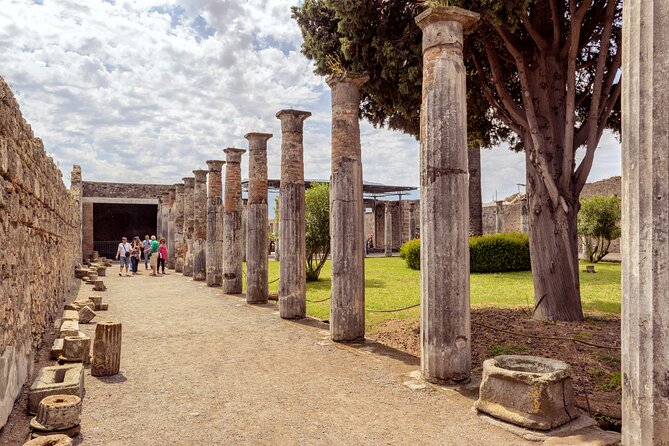
Pompeii and Herculaneum give you two very different views of Roman life, and this seven-hour small-group outing fits both into one well-planned day. Pompeii spreads across broad streets, theaters, baths, shops, and grand homes. Herculaneum is smaller, tighter, and often more intimate, with remarkably preserved buildings and wooden details.
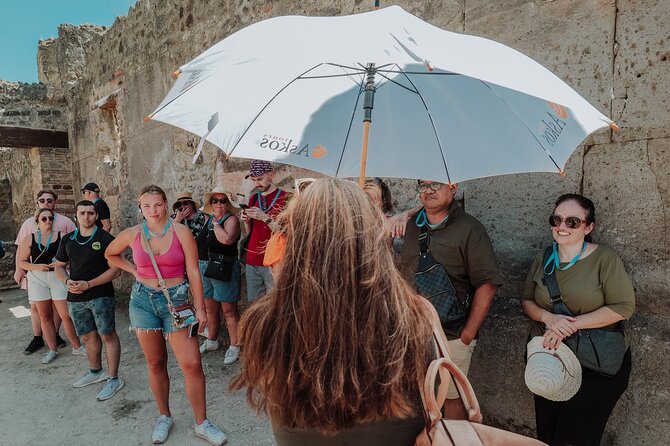
I like the archaeologist-led guiding, especially for a site where a pile of old walls can otherwise become a blur. Guides such as Rafael, Gennaro, Michele, Vincenzo, and Giulia have been praised for clear explanations, humor, good pacing, and the ability to keep a group together. I also like the direct minibus transport and fast-track entry, which save time in a busy part of Italy.
The trade-off is simple: you cover a lot of ground in a single day. The tour gives you a strong introduction rather than time for every house, fresco, and side street, and you should expect plenty of uneven walking under the sun.
Key points to know before booking
- Two major Roman sites in one day: Spend about two hours at Pompeii and two hours at Herculaneum, with transportation between them.
- An archaeologist leads both walks: The guide explains domestic life, public buildings, eruption damage, and the purpose of the ruins.
- Fast entry matters: Pompeii Express and Herculaneum admission are included, helping you spend more time inside.
- The route covers famous highlights: Expect the Forum, Via dell’Abbondanza, House of the Faun, Lupanar, theaters, baths, and several Herculaneum homes.
- It is a walking-heavy day: The pace is described as easy to moderate, but the ancient streets can be uneven and the site areas are large.
- Food is on your own: Meals and drinks are not included, though the schedule allows time for lunch between the two sites.
Why seeing Pompeii and Herculaneum together works
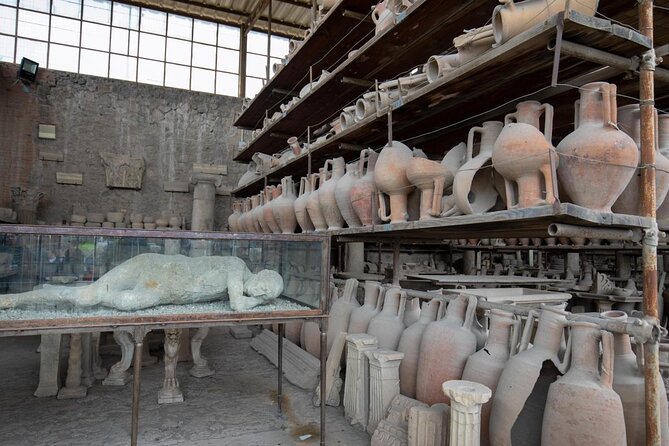
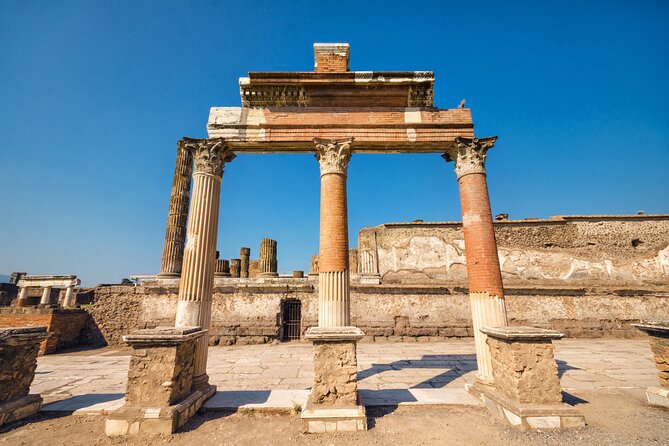
Pompeii and Herculaneum were both buried after the eruption of Mount Vesuvius in AD 79, but they offer different kinds of archaeological drama. Pompeii is the sprawling city. You walk along long streets and pass public spaces, shops, houses, theaters, and baths. It helps you picture how a whole Roman town worked.
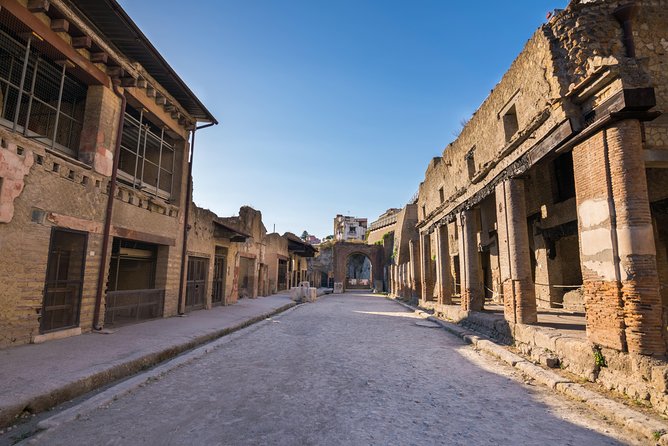
Herculaneum feels more compact. Its buildings are often better preserved, with upper floors, woodwork, wall decoration, and household details that make the town feel close at hand. The two-hour visit cannot show you everything, but it gives you a useful contrast with Pompeii.
I think this pairing is stronger than visiting Pompeii alone, particularly if you have only one day near Naples. Pompeii explains the scale of Roman urban life. Herculaneum brings you closer to the private side of that life.
The guide is important here. Without context, you may see a bakery, a bath, or a painted room without understanding how it fit into daily life. An archaeologist can point out construction methods, social clues, religious spaces, and the damage caused by the eruption. That turns the walk from a collection of ruins into a readable ancient neighborhood.
More Pompeii and Amalfi Coast Excursions in Italy:
- Naples Shore Excursion: Private Tour to Sorrento, Positano, and Amalfi
★ 4.5 · 352 reviews - Naples Shore Excursion Mt Vesuvius and Pompeii Day Trip
★ 4.0 · 313 reviews - Naples Shore Excursion: Pompeii Half Day Trip from Naples
★ 4.0 · 313 reviews
Starting near Naples Central Station
The listed meeting point is Starhotels Terminus at Piazza Giuseppe Garibaldi, 91, beside Naples Central Station. This is a practical place to begin if you are staying near the station or arriving by train. The experience also describes pickup and round-trip transport from the Naples Central Station or train station area.
Because the exact pickup arrangement can matter in Naples, check your confirmation for the meeting instructions. The tour includes a professional driver and minibus transport, so you do not need to arrange separate trains or taxis to the archaeological parks.
The maximum group size is 20 people. That is not a private tour, but it is smaller and easier to manage than a large coach outing. Several guides have been praised for keeping everyone organized, starting on time, and answering questions without losing the group’s pace.
The outing lasts about seven hours. One reported schedule had the group back around 4:30 p.m., though your exact timing can vary. That makes the tour workable for a full day in Naples, but you should not plan an important activity immediately afterward without leaving some margin.
Pompeii: the Forum and the city streets
The first major visit is the Archaeological Park of Pompeii, with about two hours inside. The route takes in a large selection of the city’s best-known areas.
You begin with the Basilica, one of the city’s key public buildings. The Forum follows, giving you a sense of Pompeii’s civic center. This is where the city’s public, political, and commercial life came together, so it is a useful place for the guide to explain the layout of the town.
From there, the route moves along Via dell’Abbondanza. This street helps you see Pompeii at street level, not just as a collection of isolated monuments. As you walk, the guide can connect houses, shops, fountains, and public buildings into a picture of ordinary movement through the city.
The House of Menander is another important stop. It is known for its refined domestic spaces and offers a look at how wealthy residents decorated and organized their homes. The Granaries of the Forum, also called the Forum barns, show a more practical side of the site and help explain how food and goods were handled.
The Stabian Baths provide a look at Roman bathing culture and public architecture. These were not simply places to wash. They were social spaces, and the remains help show how Roman cities invested in shared facilities.
The Lupanar is one of Pompeii’s most talked-about stops. Its small rooms and surviving wall paintings provide evidence of a commercial sex business, though the site can feel crowded because many groups want to see it. Your guide can add useful context and keep the subject grounded in the evidence rather than treating it as a novelty.
The House of the Faun is one of Pompeii’s grand private residences. Even with only a short visit, it gives you a sense of the size and status of elite homes. The precise access to individual rooms can vary, so think of this as a highlights visit rather than a promise that every interior will be open.
The two theaters complete the Pompeii section. The Odeon, or Small Theatre, was designed for more intimate performances. The Great Theatre gives you a larger public setting and helps show how important entertainment was in Roman city life.
Two hours is enough to create a strong framework, but it is not enough for a slow photographic exploration. If you want to examine every fresco or explore quiet corners on your own, this format may feel brisk. The benefit is that you avoid spending half the day deciding where to go next.
Herculaneum: preserved homes and household details
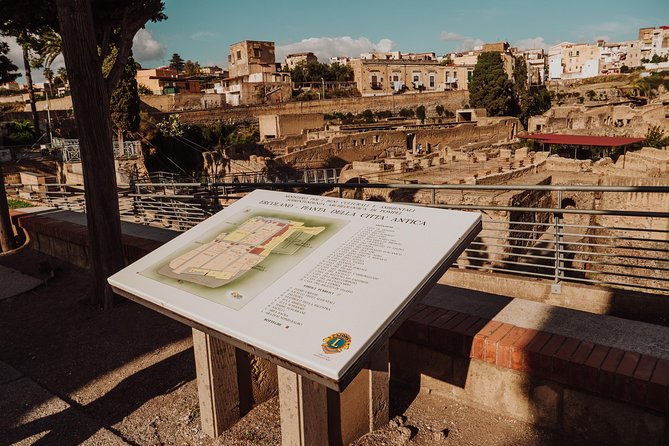
After Pompeii, the minibus takes you to the Archaeological Park of Herculaneum. The visit lasts about two hours and focuses on a series of homes, public buildings, and streets.
The House of the Deer is one of the major residential highlights. Its setting and layout help explain how affluent residents used their homes for daily life, social gatherings, and views toward the surrounding area. The Terrace of Marcus Nonius Balbus adds a public and commemorative element to the visit.
The College of the Augustales is especially useful for understanding local religious and civic life. This building was connected to the worship of the imperial cult, and its decoration shows how religion and public identity overlapped in Roman towns.
The House of the Relief of Telephus offers another look at elite decoration. You may also see the House of the Wooden Partition, where preserved timber gives the site a rare human scale. Wood normally disappears over time, so surviving pieces help you picture doors, furniture, and household fittings as practical objects rather than abstract archaeological fragments.
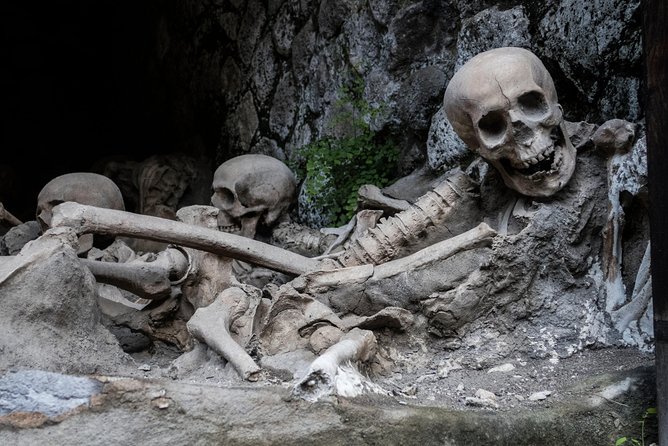
The House of the Skeleton is one of the more evocative stops, while the Central Baths show the town’s bathing facilities. The House of the Black Salon, Samnite House, House of the Fine Courtyard, and House of the Grand Portal add more domestic variety to the route.
Herculaneum is often easier to read room by room than Pompeii, but its preserved details can also make the visit feel more intense. You may notice how close the ancient rooms are to one another, how narrow some paths feel, and how much information is packed into a small area.
The guide’s role is especially useful here. A strong explanation can connect a wooden partition, a bath complex, a painted salon, or a courtyard to the people who used it. The best guides on this route, including Rafael, Gennaro, Michele, and Vincenzo, have been described as friendly, funny, and able to explain difficult material in plain language.
More Small Group Shore Excursions in Italy:
- Naples Shore Excursion:Small Group Naples City Sightseeing Tour
★ 3.5 · 33 reviews - Naples: Amalfi Coast Small Group Tour Shore Excursion
★ 4.4 · 30 reviews - 9 hour Small group Rome shore excursion led by an expert historian, port pick-up
★ 3.5 · 9 reviews - Daintree Rainforest, Mossman Gorge Small-Group from Port Douglas
★ 5.0 · 2,326 reviews
What the two-hour stops really mean
A two-hour visit at each site is a useful compromise. You receive a guided route through the main points without spending an entire day on one archaeological park. You also get transportation handled for you, which removes the need to work out the local connections between Naples, Pompeii, and Herculaneum.
The limitation is depth. Pompeii alone can occupy most of a day, and Herculaneum rewards careful study. If you are an archaeology specialist, a returning visitor, or someone who wants extended time for photography, you may prefer separate visits.
For a first visit, though, the timing makes sense. The guide selects the major sights and explains what you are seeing. You do not need to arrive with a detailed map or spend the first hour finding the Forum.
The tour also avoids a common problem at large archaeological sites: losing energy before reaching the most important areas. The organized route keeps the day moving, though you should still expect many steps.
Walking, weather, and comfort
The outing is physically manageable for most people, but it is not a sit-down sightseeing day. You walk through ancient streets, courtyards, public buildings, and residential areas. Surfaces can be uneven, and the Pompeii visit in particular covers a broad area.
Wear shoes that you can comfortably use for several hours. Bring water, sun protection, and a mask if required under the health rules in effect for your visit. The supplied conditions also state that social distancing and temperature checks may apply, and anyone with a temperature of 37.5 C or higher or obvious symptoms of contagion may not be admitted.
The minibus provides welcome breaks between sites. Air conditioning was specifically appreciated on one outing, and the professional driver was praised for safe, smooth transport. Still, road conditions around Naples can affect the day, so keep your schedule after the tour flexible.
The route can suit most people, and service animals are allowed. If you have concerns about long walks or uneven ancient paving, ask about the current route before booking.
Guide quality makes the biggest difference
The strongest part of this experience is the human guidance. A site this large can overwhelm you, especially when several buildings appear similar at first glance.
Rafael has been praised for mixing a large amount of information with humor and warmth. Gennaro is known for an easy pace and for choosing historical and architectural details that keep a group engaged. Michele Lamberti has been singled out for making the ancient streets feel alive, while Vincenzo has been praised for clear timing and a smooth day.
Giulia has also been praised for keeping the group on schedule while making the explanations lively. These names do not guarantee a particular guide on your date, but they show the kind of approach to expect: organized, friendly, and focused on making the sites understandable.
I would choose a guided visit here rather than going alone for a first visit. The ruins are impressive on their own, but the social details, building functions, and eruption story make much more sense when someone explains them as you walk.
Is $173.27 a fair price?
At about $173.27 per person, this is not the cheapest way to visit Pompeii and Herculaneum. The price includes the archaeologist’s guidance at both sites, Pompeii Express entry, Herculaneum admission listed at €16, and minibus transport with a professional driver.
That package has real value if you are staying in Naples and want both sites in one day. You are paying for planning, transportation, admission, and interpretation, not just a ride to the entrance. Fast-track access matters most when lines are long or your time in the area is limited.
The value is weaker if you prefer to explore slowly, use public transport, and read your own guidebook. You will have less freedom to linger, and meals and drinks are not included. The scheduled route also means you may pass through a house without having time to study every room.
For a first-time visit, particularly during a short stay or shore stop in Naples, I think the price is defensible. The combination of two sites, included tickets, direct transport, and an archaeologist-led walk removes several common hassles.
Who should book this outing?
This works best for you if you want an efficient first look at both ancient cities, prefer clear explanations, and do not want to manage trains or local transfers. It also suits couples, families with older children, and first-time visitors who want the major sights placed in context.
You may want another format if you have already visited Pompeii, plan to spend a full day at one site, or care more about independent wandering than guided structure. The group can include up to 20 people, so it will not feel like a private archaeological walk.
The tour is also a good match for anyone who likes history but does not already know the terminology. The guides explain architecture, religion, public life, and the eruption in accessible terms, with humor used to keep a serious subject from becoming dry.
Should you book it?
Book this tour if your priority is seeing both Pompeii and Herculaneum in one organized day from Naples. The archaeologist guides, included admission, direct minibus, and fast entry create a practical package, and the guides named above have a strong record for clear explanations and steady pacing.
Skip it if you want hours of unstructured time at one site or dislike walking with a group. For most first-time visitors with limited time, though, this is a sensible way to meet two of Italy’s most important archaeological parks without wasting the day on transport and logistics.
FAQ
How long does the Pompeii and Herculaneum tour last?
The experience lasts about seven hours.
Where does the tour start?
The listed meeting point is Starhotels Terminus, Piazza Giuseppe Garibaldi, 91, Naples, near Naples Central Station.
Is transportation included?
Yes. Transportation by minibus and assistance from a professional driver are included.
Are Pompeii and Herculaneum admission tickets included?
Yes. Pompeii Express entry tickets and Herculaneum entry tickets are included.
Is a guide included at both archaeological sites?
Yes. An archaeologist guide provides guidance at Pompeii and Herculaneum.
How much time is spent at Pompeii?
The Pompeii Archaeological Park visit lasts about two hours, followed by short visits to the listed highlights within the park.
How much time is spent at Herculaneum?
The Herculaneum Archaeological Park visit lasts about two hours, followed by short visits to the listed buildings and areas.
Are meals and drinks included?
No. Meals and drinks are not included. The schedule allows time for lunch between the two site visits.
What is the cancellation policy?
You can cancel for a full refund up to 24 hours before the experience start time. Cancellations or changes made less than 24 hours in advance are not accepted for a refund.
Just added around Italy
- Private Shore Excursion Livorno Port “Discovery Pisa & Florence”★ 5.0 · 16 reviews
- Florence and Pisa Exploration from Livorno Cruise Port★ 4.0 · 3 reviews
- Deluxe Florence and Pisa Tour from Livorno Cruise Port★ 4.5 · 32 reviews
- Florence and Lucca Shore Excursion from Livorno Port★ 5.0 · 2 reviews
- Private VIP Exclusive Tour of Cinque Terre – Shore Excursion from Livorno/Spezia★ 3.5 · 2 reviews
- Florence Hop On Hop Off Shore Excursion from Livorno★ 4.0 · 28 reviews
- Cinque Terre Shore Excursions from Livorno Port★ 4.5 · 33 reviews
- Day Tour in Livorno and Pisa Shore Excursion from Livorno★ 4.0 · 3 reviews
Pompeii & Amalfi Coast Excursions, compared.
Private Tour to Sorrento, Positano, and Amalfi
Read our review →

Naples City and Pompeii Half Day Sightseeing Tour
Read our review →
Sorrento and Amalfi Coast Independent Day Trip from Naples
Read our review →
Semi Private Amalfi Coast Shore Excursion with Pick Up
Read our review →
Pompeii, Positano and Sorrento Shore Excursion From Naples
Read our review →
Sorrento, Amalfi Coast, Pompeii Trip from the Port
Read our review →Browse the lists this tour appears in