
REVIEW · GERMANY
Rostock: Warnemünde and Rostock Half-Day Shore Trip
Warnemünde’s brightly painted fishing boats and Rostock’s medieval center make an excellent pair, and the local train and tram rides connect them without the price or long day of a Berlin excursion. You get a quick look at the seaside town, then spend more time in Rostock, where St. Marien Church’s astronomical clock gives the tour its most memorable indoor stop.
I like the way this trip uses ordinary public transport, since you see the area much as local residents do. I also like the small-group limit of 20, with many departures apparently handled by groups closer to 10 people. The main catch is simple: this is a serious walking tour over cobblestones, with no dedicated coffee or lunch stop built in.
Key points
- Warnemünde’s Old Stream: See fishing boats, cafés, gabled houses, half-timbered façades, and ornamental doors.
- Local transport included: Ride the commuter train and tram to Rostock with your guide handling the German-only announcements and connections.
- St. Marien Church: Visit the church interior and time your stop to see its astronomical clock.
- History with local context: Guides such as Tobias, Yvonne, Cornelia, Anne, and Bernd explain Rostock, Warnemünde, and life in East Germany.
- One hour of free time: Browse Rostock’s central shops or stop for a snack, though some people may want more time.
- Walking matters: Expect cobblestones and repeated stretches of 15 to 20 minutes on foot. The tour is not suitable for wheelchair users.
Why pair Warnemünde with Rostock?
This five-hour shore trip gives you two very different places in one compact outing. Warnemünde is a small seaside district with a former fishing-village feel. Rostock is the larger Hanseatic university city, with market squares, churches, a town hall, medieval walls, and streets shaped by centuries of trade.
That contrast is the main reason I like this excursion. You are not spending the entire port call in one shopping street. Instead, you see the coast, take public transport inland, and spend time in a city with more layers to explain.
The tour costs $81 per person. That is not the cheapest way to get around if you are comfortable reading German signs, buying transport tickets, and finding the sights yourself. But the price includes port pickup and return, train and tram tickets, an English-speaking guide, and entry to St. Marien Church. For a first visit, the value comes from the organization and local interpretation rather than from transportation alone.
It also avoids the long round trip to Berlin. A Berlin shore excursion can consume much of a port day in transit. Here, you stay close to Warnemünde and Rostock, leaving a better chance of enjoying the port area before or after the tour.
More Half-Day Shore Excursions in Germany:
- Flam: The Wonders of Flam Guided Half-Day Shore Excursion
★ 4.8 · 668 reviews - Skagway Shore Excursion: Half-Day Tour to the Yukon Border and Suspension Bridge
★ 5.0 · 543 reviews - St Maarten Shore Excursion: Orient and Maho Beach Half-Day Tour
★ 4.5 · 486 reviews
Meeting your guide at the cruise berth
The guide meets you at the cruise ship port at Am Passagierkai 6, directly at your ship’s berth. Look for a person holding a sign with the tour name. That detail matters in Warnemünde, where a large ship can release many groups into the same general port area.
Guides named in past departures include Cornelia, Tobias, Yvonne, Anne, Bernd, Andreas, Daniel, and Ringo. The strongest part of the guiding on this tour is the local background. Several guides have explained East German life, local geography, and the changes Rostock has seen over time.
You should expect a guide who keeps the group moving through the transport system, not a coach waiting outside each sight. That is useful because the commuter train and tram are part of the experience. One guide even used old photographs to show how parts of the area looked in earlier years.
Group size can reach 20 people, though some departures have been much smaller. A group of nine or 10 makes it easier to hear explanations and ask questions. It also helps when crossing stations and boarding public transport.
Warnemünde’s Old Stream and fishing boats
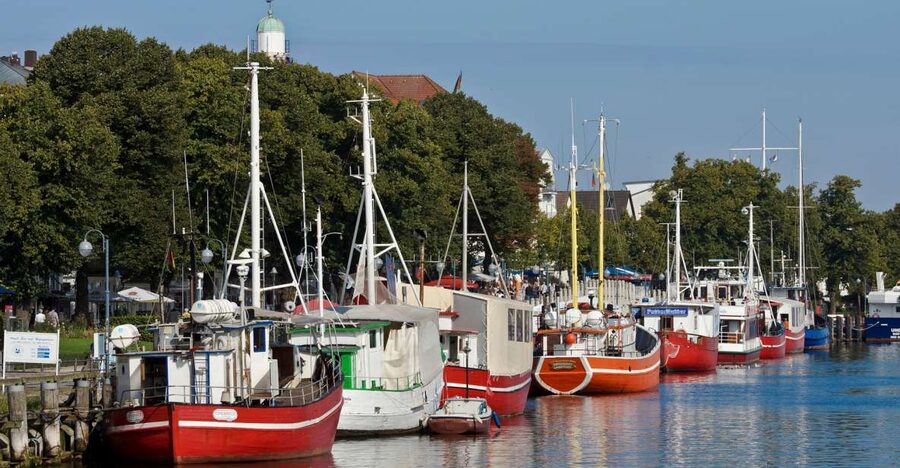
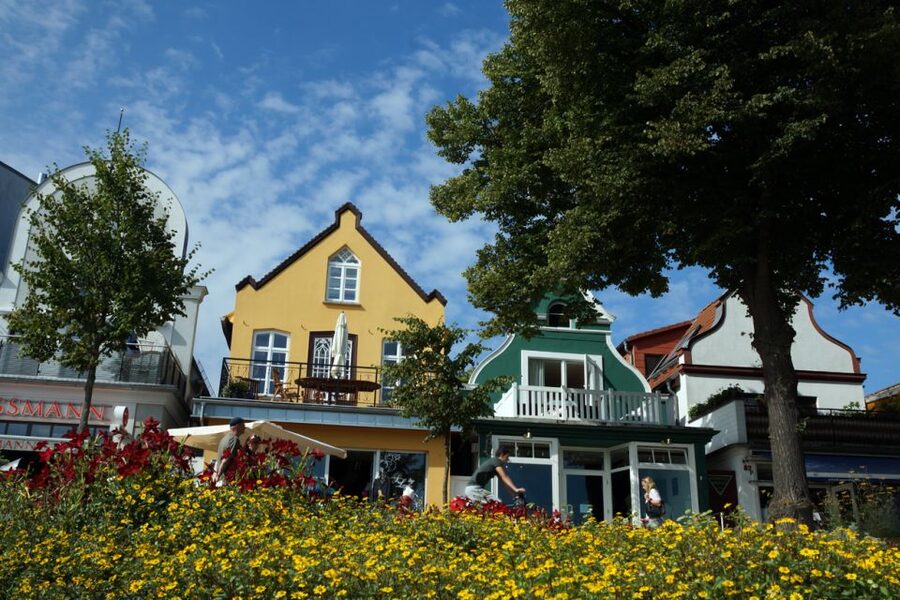
The first hour focuses on Warnemünde. You walk through the former fishing village and see typical 18th- and 19th-century houses, many with gabled fronts, half-timbering, and decorated doors.
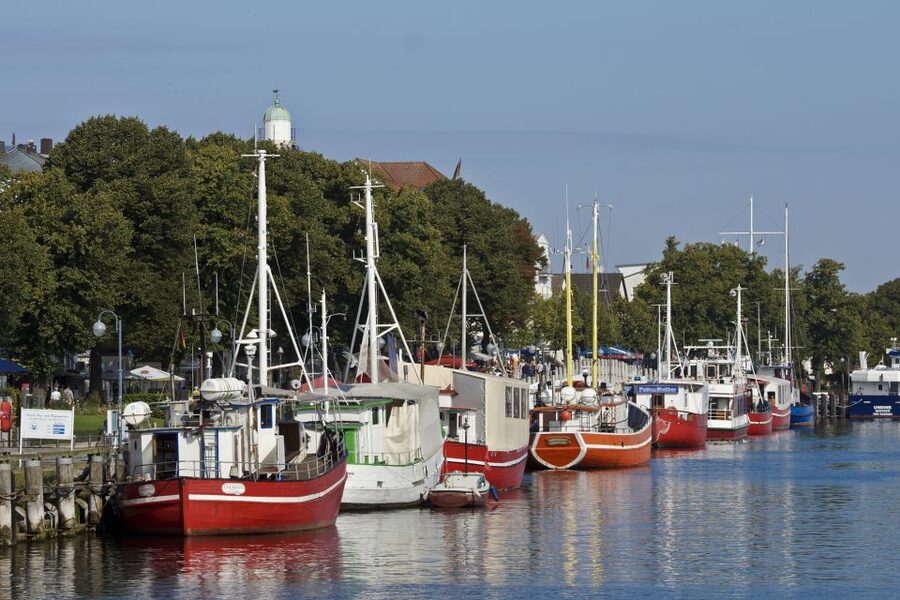
The Old Stream canal is the visual highlight. Brightly painted fishing boats line the water, with cafés and small shops along the edge. It is a pleasant introduction to the town because it gives you working-harbor details as well as postcard views.
I would pay attention to the small features here rather than rushing to take photographs. The doors, façades, boats, and narrow canal tell you more about Warnemünde than a quick pass through a modern shopping district would.
The introduction is brief. That is both a strength and a limitation. You get enough orientation to understand the place, then continue to Rostock. If you want more time for boutiques, the waterfront, cake, or a fish sandwich, you can return to Warnemünde after the guided portion, provided your ship schedule allows it.
That possibility is worth keeping in mind. The tour does not try to squeeze every Warnemünde activity into the morning. It gives you the setting and leaves the town available for a second look later.
The 30-minute train and tram ride to Rostock
The trip to Rostock takes about 30 minutes by commuter train and tram. Your tickets are included, and the guide leads the way through the connections.
This is not just dead time between sights. You get a practical look at how the two towns fit together, and you avoid the stress of managing German transport signs on your own. One useful point from past departures is that some train announcements are in German only, so staying with the guide matters.
The guide also keeps track of the group while boarding and changing services. That is especially helpful for anyone who is less comfortable with public transport or concerned about being separated from the group.
You should still be ready to stand, walk through stations, and board at a normal public-transport pace. There is no private vehicle carrying you from door to door. That makes the day feel more local, but it adds another reason to wear supportive shoes.
Same port, a different day ashore:
- All-in-One Berlin Shore Excursion from Warnemunde
★ 4.5 · 293 reviews - Best Berlin Shore Excursion from Warnemunde or Rostock Port
★ 4.8 · 200 reviews - Deluxe Berlin: Hassle-Free Shore Tour from Warnemunde Cruise Port
★ 4.5 · 82 reviews - All-in-One: Beautiful Lübeck: Shore Excursion from Kiel Port
★ 4.5 · 50 reviews
Rostock’s market squares and Hanseatic center
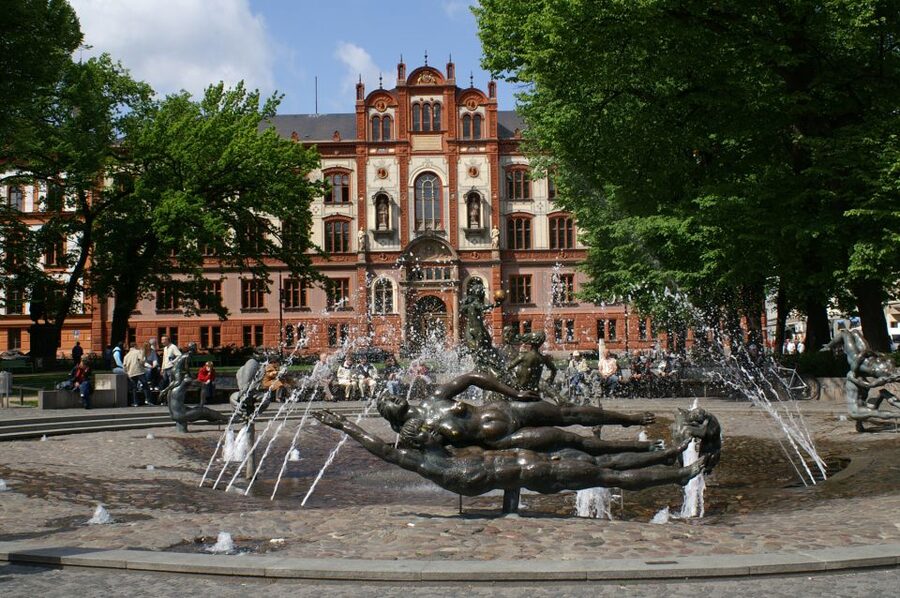
Rostock is the larger part of the tour, with roughly an hour and a half of guided sightseeing before the church visit and free time. The city’s identity comes through in its old Hanseatic buildings, university connections, market squares, town hall, medieval town wall, and the Monastery of the Holy Cross.
The guide provides the thread connecting these places. You hear about Rostock as a medieval trading city and university town, then get context for its modern life and East German past. The city is most rewarding when you understand how the old center and later political changes fit together.
Several guides have been praised for clear English and a good pace. That matters in a walking tour where the information can otherwise become tiring. Tobias, Cornelia, Yvonne, Anne, and Bernd are among the guides singled out for careful explanations, organization, or attention to the group.
The route includes cobblestones and several extended walking periods. You may stop at major sights, but this is not a hop-on, hop-off outing. If you have a slow walker in your group, tell the guide early. One past guide adjusted well for an older participant, while another departure was described as moving too quickly for a group over 70.
Inside St. Marien Church and the astronomical clock
St. Marien Church is the tour’s main interior visit. Admission is included, and the guide explains the church while pointing out the astronomical clock.
Try to confirm the timing of the clock operation with your guide. One departure was timed well enough for the group to witness it, which adds a small but special moment to the visit. The clock is not simply a decorative object. It gives you a concrete way to understand the technical skill and religious worldview behind a medieval church.
The church also provides a welcome change from outdoor walking. Still, it is only one indoor stop. If the weather turns poor, most of the tour remains outside or on public transport, so pack accordingly.
I would give this stop more attention than the free shopping time if you enjoy historic buildings. The church provides substance beyond a quick photograph of a square, and its interior is one of the clearest reasons the admission fee is part of the package.
One hour to explore Rostock on your own
After the guided sightseeing, you get about an hour of free time in central Rostock. You can browse shops, find a snack, or revisit a square that caught your eye.
An hour is useful, but it goes quickly. Some people will find it enough for a sausage and a short look at the shops. Others will want more time for lunch, browsing, or independent photography. The scheduled return to Warnemünde limits how far you should wander.
The free period also gives you a break from listening. Five hours with a guide can be information-heavy, especially when the day includes history, architecture, transport instructions, and local stories. I would use this hour for food and a restroom stop rather than trying to cover another distant sight.
Food and drinks are not included. You might look for a German sausage or another quick snack in the center. Do not assume the group will stop for a full meal, since one practical criticism of the schedule is the lack of a planned coffee and restroom break halfway through.
The return journey and time in port
The group returns to Warnemünde by public transport, with about 30 minutes allocated for the train journey. The tour then ends back at Am Passagierkai 6, where you can return to the ship or continue exploring if your schedule permits.
The port pickup and return are important advantages for cruise passengers. You are not left to judge how much time to allow for the trip back, and the guide handles the same transport process in reverse.
I would still keep an eye on the ship’s all-aboard time. The tour is designed to return to the cruise port, but public transport has less flexibility than a private vehicle. Follow the guide’s timing and avoid extending your independent time in Rostock.
If you still have energy, Warnemünde is the natural place to continue. The first walk gives you enough orientation to revisit the canal, shops, waterfront, cafés, or fish stands without needing another guided introduction.
Walking, cobblestones, and comfort
The operator says each participant should be able to walk for 15 to 20 minutes at a time. In practice, you should think of the tour as a full walking day broken up by train and tram rides, not as a gentle stroll with occasional sightseeing.
The surface is important. Cobblestones can be tiring, and some stops may offer better views than others depending on where the group can stand. Wear comfortable shoes with good support, and avoid bringing luggage or a large bag.
This outing is not suitable for wheelchair users. The combination of cobbled streets, station access, public transport, and extended walking makes it a poor match for anyone who cannot comfortably manage the route.
Older participants can enjoy it if they walk steadily and take the planned pauses. I would contact the operator before booking if anyone in your party needs frequent seating, a walker, or more assistance than a normal walking group can provide.
How the guides shape the experience
The guide is the biggest variable in a history-focused tour. The strongest departures have featured guides who speak clear English, keep the group together, and connect Rostock’s buildings to personal or local stories.
Cornelia was noted for helping the group use the train and tram like locals. Tobias has been described as well prepared, clear, and attentive to timing. Yvonne has led groups with a friendly manner and strong local information, while Anne has explained St. Mary’s Church particularly well.
Daniel, an Irish-born guide who has lived in Germany for many years, brought a useful outside perspective along with local knowledge. Other guides, including Bernd, Andreas, and Ringo, have also been praised for warmth and historical explanations.
You should not expect every guide to use the same stories or speaking style. Some departures may feel packed with history, while others may leave more room for questions. The common thread is that the guide makes the public transport and two-town route workable.
The tour may suit adults more than young children who need constant activity. Much of the appeal lies in medieval city development, church details, and East German history. A child who enjoys trains, boats, and old buildings could have a good time, but the walking and listening demands are real.
Is $81 a fair price?
At $81, this tour is best judged against the cost and effort of arranging the same day yourself. You would need to find the port meeting point, buy transport tickets, plan the route, locate St. Marien Church, and manage your return schedule. The tour handles those pieces and adds an English-speaking guide.
The price also compares well with the long-distance option of visiting Berlin from Warnemünde. You see two nearby places without giving most of the day to a bus or train.
The value is weaker if you want extensive free time or dislike group pacing. You get only about one hour on your own in Rostock, and the Warnemünde portion is mainly a guided introduction. Independent visitors who are happy navigating German transport may prefer to spend the $81 on food, museums, or shopping.
For a first port call, I think the organization makes the price reasonable. You see both towns, enter the church, use local transport, and return to the ship with a guide watching the clock.
Should you book the Warnemünde and Rostock shore trip?
Book this tour if you want two distinct towns in five hours, prefer a guide to explain the history, and are comfortable walking over cobblestones. It is especially useful for first-time visitors who do not want to spend the day traveling to Berlin.
I would choose it for an adult group interested in architecture, local transport, Hanseatic history, and East Germany. The train and tram rides add an authentic local touch, while St. Marien Church gives the day a clear main attraction.
Skip it if you need a wheelchair-accessible route, want a slow café day, or prefer several hours of unplanned shopping. You should also think twice if anyone in your group cannot walk for repeated 15 to 20 minute stretches.
For most able walkers arriving by cruise ship, this is a well-organized way to make the most of the port. Leave room in your plan to return to Warnemünde afterward for a fish sandwich, a café stop, or a quieter look at the boats.
FAQ
How long does the shore trip last?
The experience lasts five hours, including guided sightseeing, public transport between Warnemünde and Rostock, a church visit, and free time.
Where does the tour begin?
Pickup is at the cruise ship port at Am Passagierkai 6, directly at your ship’s berth. Look for a guide holding a sign with the tour name.
What languages are available?
The live tour is offered in English only. No other languages are available.
Is public transportation included?
Yes. The price includes tickets for the commuter train and tram used to travel between Warnemünde and Rostock.
How much free time do I get in Rostock?
You get about one hour of free time in central Rostock for shopping or a snack.
Is food included?
No. Food and drinks are not included, so plan to buy any snacks or beverages during the free period.
Can wheelchair users join the tour?
No. The experience is not suitable for wheelchair users, and participants should be able to walk for 15 to 20 minutes at a time.
Just added around Germany
- All-in-One Hamburg Shore Excursion from the port of Kiel★ 4.5 · 21 reviews
- From Kiel: All-in-One Hamburg Shore Excursion★ 4.5 · 2 reviews
- All-in-One: Beautiful Lübeck: Shore Excursion from Kiel Port★ 4.5 · 50 reviews
- Hamburg Shore Excursion: Private Berlin Day Trip★ 5.0 · 6 reviews
- Guided bike tour Hamburg with neat city bikes, cruisers, mountain bikes★ 5.0 · 44 reviews
- Warnemuende Shore Excursion: Private Berlin Tour★ 4.5 · 27 reviews
- Deluxe Berlin Tour from Warnemunde or Rostock Cruise Port★ 4.5 · 11 reviews
- Best Berlin Shore Excursion from Warnemunde Rostock Cruise Port★ 3.0 · 2 reviews
Germany Shore Excursions, compared.

All-in-One Berlin Shore Excursion from Warnemunde
Read our review →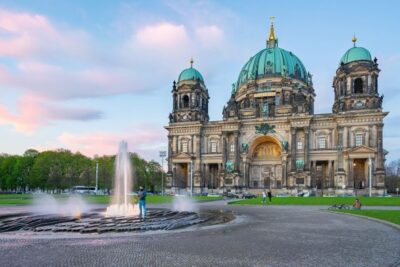
Best Berlin Shore Excursion from Warnemunde or Rostock Port
Read our review →
Deluxe Berlin: Hassle-Free Shore Tour from Warnemunde Cruise Port
Read our review →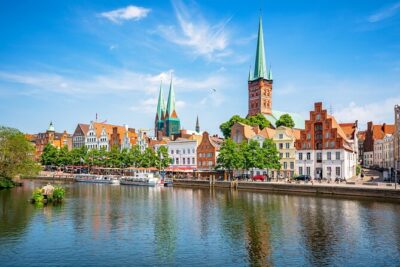
All-in-One: Beautiful Lübeck: Shore Excursion from Kiel Port
Read our review →
Guided bike tour Hamburg with neat city bikes, cruisers, mountain bikes
Read our review →
Explore Berlin Shore Excursion: Top Attractions Private Tour from Warnemuende
Read our review →
Berlin and Sachsenhausen: Shore Trip from Warnemünde Port
Read our review →
Private All-in-One Berlin Shore Excursion from Warnemünde Port
Read our review →Browse the lists this tour appears in