REVIEW · TOURS
Shore Excursion from Salaverry port
Trujillo’s ancient adobe temples are the real reason to leave your cruise ship in Salaverry. In five hours, you can see the Moche temples of the Sun and Moon, a Chimú ceremonial site, and Chan Chan, the vast former capital of the Chimú empire. I especially like the variety of ruins and the small-group transport, which makes a short port day easier to manage.
The main catch is pace. You are covering several important archaeological sites in a limited window, and entrance fees, food, and drinks are not included. You also need to take the cruise shuttle to Salaverry Plaza before meeting the guide, so read the departure instructions carefully.
Key points
- Three major archaeological stops: See Huaca de la Luna, Huaca Arcos Iris, and Chan Chan in one shore excursion.
- Moche and Chimú cultures: Your guide explains how the two civilizations used temples, plazas, palaces, and adobe reliefs.
- Museum visit included in the route: The Huacas de Moche Museum adds ceramics, tools, tombs, and other objects to the ruins.
- Useful for cruise passengers: Round-trip transport from Salaverry and a five-hour schedule keep the day focused.
- Guides praised by name: Alfredo and William received especially strong comments for clear English, good organization, and well-timed explanations.
- Plan for extra costs: Entrance fees, meals, and drinks are separate, and cash is recommended.
Why this Salaverry shore excursion is worth your port day
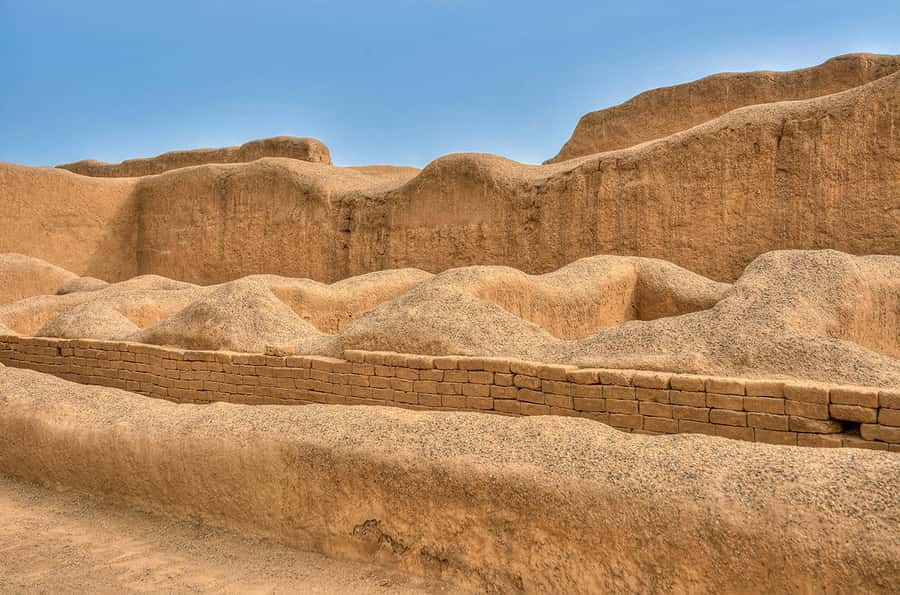
Salaverry is the gateway to Trujillo’s archaeological zone, where two powerful coastal civilizations built enormous structures from adobe. This is not a day of polished colonial streets or grand stone monuments. It is a day of mud brick, desert sun, carved walls, and large ceremonial centers that still make sense once a guide explains how they were used.
I like this outing because it does not force you to choose between Moche and Chimú sites. You see both. The Moche temples at Huaca de la Luna and Huaca del Sol represent an earlier civilization, while Huaca Arcos Iris and Chan Chan show the later Chimú world. That contrast gives the day a clear shape rather than leaving you with a blur of similar ruins.
The cost is $80 per person. That is fair if you value port pickup, return transport, a live English or Spanish guide, and a planned route through sites that are difficult to combine independently during a cruise stop. It is less attractive if you want a slow archaeological study or prefer to arrange every ticket and meal yourself.
The most important point is timing. The advertised duration is five hours, though one booking account described a seven-hour day. Port excursions can stretch because of traffic, site visits, or a meal stop, so confirm the schedule against your ship’s all-aboard time. The company asks for your ship name, arrival time, departure time, and a mobile number that works with WhatsApp.
A few more shore excursions around the world worth a look
- FOR CRUISERS: Skip The Lines PRIVATE EPHESUS TOUR &On Time Return
★ 5.0 · 8,527 reviews - Top Choice For Cruisers: Ephesus, Mary’s House WITH TICKETS+LUNCH
★ 5.0 · 7,233 reviews - PRIVATE EPHESUS TOUR FOR CRUISERS: On-time Return and Skip-Line
★ 5.0 · 5,807 reviews
Meeting your guide at Salaverry Plaza
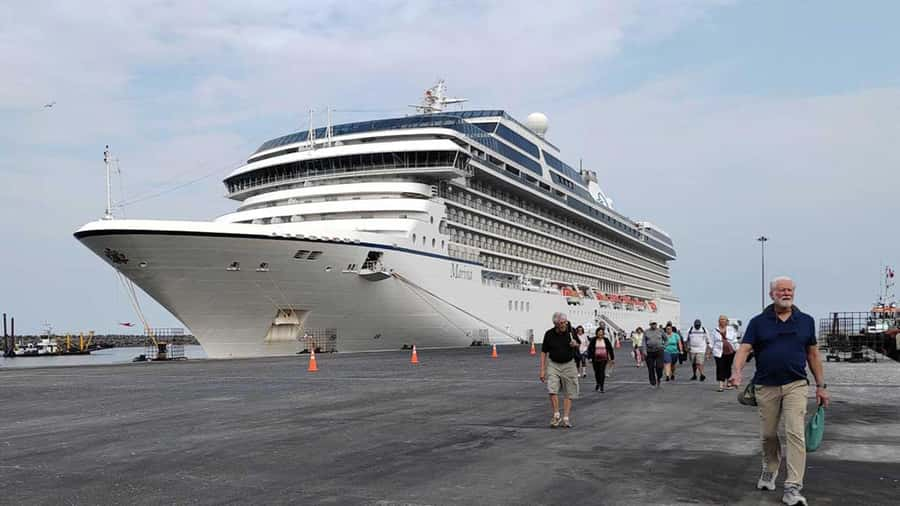
You do not meet the vehicle directly at the ship. On arrival, take the shuttle bus supplied by the cruise company. The ride to Salaverry Plaza takes about 10 minutes. Look for the JD ADVENTURE sign at the plaza.
The operator sends fuller meeting instructions two days before arrival, so keep checking your email. This is one of those small details that can make or break a port excursion. Give the company complete arrival and departure information, and keep your phone available in case the meeting point or departure time changes.
The vehicle is described as small-group transport. That matters here. A smaller group usually makes it easier to hear explanations at the temples and easier to keep the route moving when the clock is tight. The tour is available in English and Spanish.
Guides named Alfredo and William received particularly strong praise for their work. Alfredo was described as friendly, clear in English, and well informed about the sites. William was praised for giving explanations at the right places and times instead of delivering long, unfocused speeches. That style is ideal for ruins: you get context when you are looking at the feature being discussed.
Huaca de la Luna and Huaca del Sol: Moche power in adobe
The first major stop is the Huacas de Moche, commonly known as Huaca de la Luna and Huaca del Sol. These huge adobe structures were built by the Moche over several centuries, not completed in a single construction project.
Huaca de la Luna served as a religious complex. Huaca del Sol functioned as an administrative center. Together, they show that the Moche built more than isolated pyramids. They created a place for ritual, government, burial, and control of the surrounding area.
The most interesting building detail is the repeated layering. As each period ended, the Moche sealed the remains of rulers inside the temple and covered the earlier platform with a new one. Over roughly 700 years, the structure grew into a stepped pyramid. What looks like one enormous mound is really a stack of building phases, each hiding an older version beneath it.
Your guide is especially valuable here because the scale can be hard to read without explanation. From the outside, adobe walls may seem plain compared with a stone citadel. Once you understand that the mound contains successive platforms and ceremonial spaces, the site becomes far more engaging.
Expect sun and an exposed setting. The supplied information recommends bringing cash and rules out backpacks, alcohol, drugs, and pets. Since the tour is not suitable for people with mobility impairments, ask about the walking conditions before booking if steps or uneven ground are a concern. The operator also lists pregnancy, certain pre-existing medical conditions, and altitude sickness among reasons the outing may not be suitable.
The Huacas de Moche Museum adds the missing detail
The museum visit is an important part of the Moche stop. Ruins show scale and layout, but museum objects help explain daily and ceremonial life. The collection includes artifacts, ceramics, utensils, and tombs.
I like this pairing. You first see the great adobe platforms, then look at the objects connected with the people who built and used them. Ceramics can show subjects and styles that are difficult to make out in the field, while tomb material gives the guide a chance to explain burial customs and the role of rulers.
The museum also gives you a break from the open sun. Keep your expectations practical: this is one stop within a tightly scheduled shore excursion, not a long museum study session. The value comes from connecting the displays to what you have just seen outside.
Same port, a different day ashore:
- From the Port of Kos: Full Day Boat Cruise to 3 Islands
★ 4.8 · 5,137 reviews - Hilo Shore Excursion: Volcanoes National Park & Black Sand Beach
★ 4.5 · 2,338 reviews - Daintree Rainforest, Mossman Gorge Small-Group from Port Douglas
★ 5.0 · 2,326 reviews - Arrecife: Timanfaya and Green Lagoon for Cruise Passengers
★ 4.6 · 2,010 reviews
Huaca Arcos Iris and the Chimú tradition
The route then moves to Huaca Arcos Iris, also called the Rainbow Temple or El Dragon. The Chimú built it around A.D. 1200, after the Moche period. This change of culture is one of the best reasons to include the site.
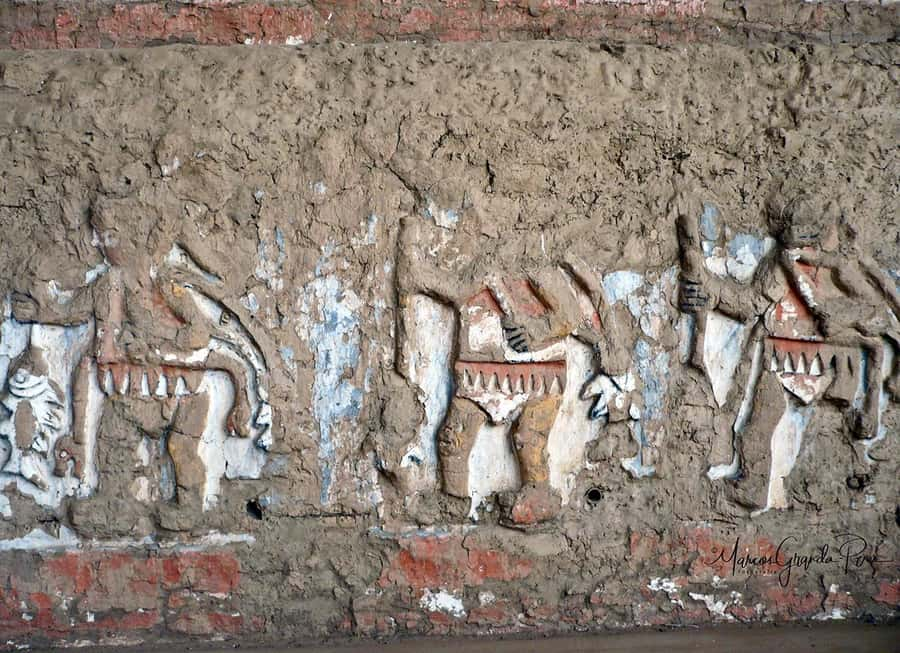
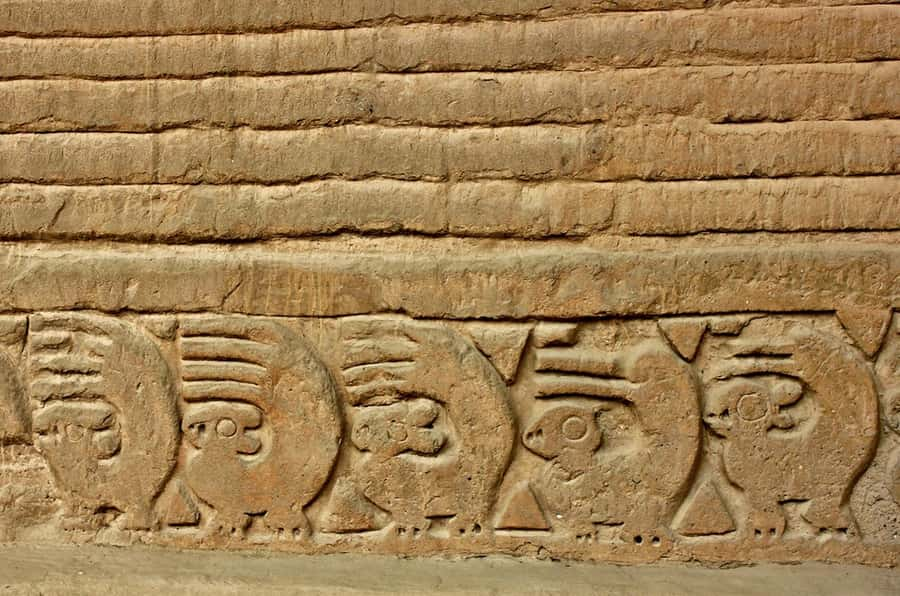
The temple has two platforms, with carved adobe panels and niches that once held ritual objects. The decoration gives you something different from the massive, layered Moche mounds. Look for the surviving patterns and repeated forms in the adobe. They show how a fragile material could carry a strong visual program when protected from the elements.
Local tradition identifies Huaca Arcos Iris as the home of Takaynamo, the mythical founder of Chan Chan. Your guide can help separate legend from archaeology without stripping the story of its interest. For many people, this is the stop that makes the later visit to Chan Chan feel connected rather than separate.
The drawback is that exposed adobe architecture requires imagination. Some panels and surfaces have been damaged or weathered, and the site may not produce the instant impact of a complete stone monument. Go for the form, the carvings, and the link to Chimú culture, not for a perfectly preserved building.
Chan Chan, the Chimú capital
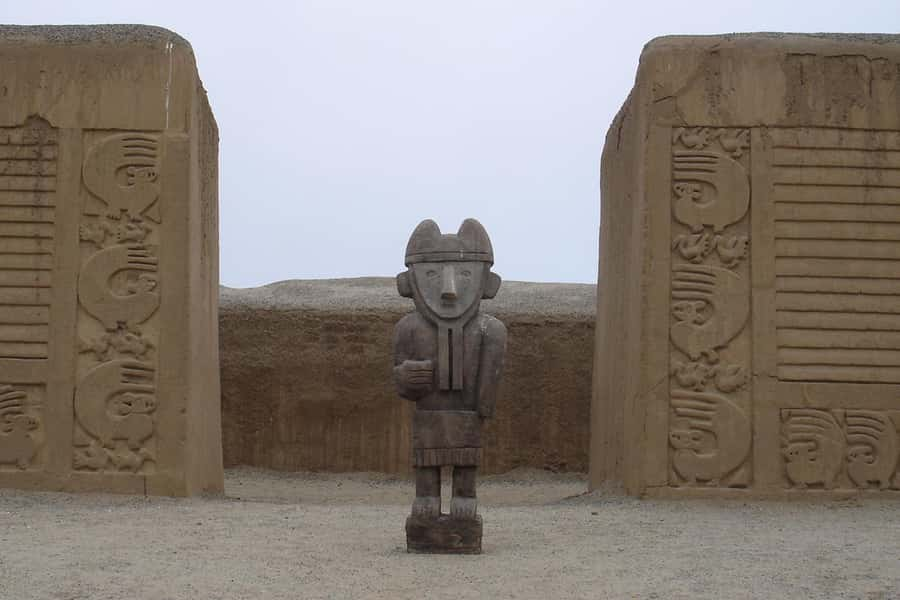
Chan Chan is the grand finale. It was the capital of the Chimú empire and is recognized as a UNESCO World Heritage Site. The complex is described as the largest pre-Columbian adobe city in the Americas, with courtyards, terraces, palaces, and gardens.
The scale is difficult to grasp from a single viewpoint. Estimates suggest that 30,000 to 60,000 people lived here. You are not simply looking at one temple. You are visiting the remains of a planned city that once supported administration, ceremony, craft, residence, and elite power.
Chan Chan’s adobe construction creates a different mood from the Moche temples. At Huaca de la Luna, the main impression is the layered ceremonial mound. At Chan Chan, the interest lies in walls, enclosed courtyards, repeated relief designs, and the organization of urban space.
Give your attention to the surviving wall panels and the way rooms connect. A guide can point out how courtyards and terraces fit into the palace layout and explain what the niches were used for. Without that context, it is easy to walk through Chan Chan seeing only walls. With it, you can picture a city designed around movement, status, and ceremony.
Weather is a practical concern. Adobe remains are vulnerable, and the site is open and exposed. Wear sensible shoes and bring protection from the sun. The supplied rules say backpacks are not allowed, so pack lightly and confirm how small personal items should be handled before setting out.
What the guide adds to the day
A good guide matters more here than at a simple sightseeing stop. The sites are large, and many of the most important details are not obvious. You need someone to explain why one temple served religious purposes, another supported administration, and later Chimú buildings used different arrangements of courtyards and reliefs.
English and Spanish guiding is available. Alfredo and William are two names associated with especially strong guiding on this route. Alfredo was praised for friendly explanations and strong command of English. William was praised for structure and timing, giving information at the right location instead of filling the walk with long monologues.
That approach suits a shore excursion. You want enough information to understand what you see, but you also need time to look, take photographs, and stay on schedule. The best moments on this tour are likely to come when the guide connects a physical detail, such as a platform, niche, tomb, or relief, to the society that made it.
Price, food, and the true cost of the outing
At $80, the tour sits in a sensible range for a five-hour cruise excursion with port transfers and a live guide. The value improves if you want to see all three archaeological areas without arranging separate transport. It also improves if you prefer a small group to a large coach.
Remember that entrance fees are not included. Food and drinks are also extra, so bring cash. One account described finishing at a restaurant with ceviche and an ocean view, but that meal should not be treated as a guaranteed part of the five-hour program. Ask the operator if a restaurant stop is planned for your sailing and allow for the possibility that it may affect the return time.
The meal issue is worth clarifying because this is a port day. If lunch is included in your cruise schedule or you need to return directly to the ship, you may prefer a route without a restaurant stop. If you want to try ceviche after the archaeological visits, ask about the timing and cost before departure.
Free cancellation is available up to 24 hours before the activity for a full refund, and you can reserve now and pay later. Those terms are helpful when a cruise itinerary may change, but you still need to give accurate ship information and monitor your email.
Who should book this excursion
I would recommend it to you if you want a strong introduction to Trujillo’s ancient cultures and prefer an organized route from the port. It suits cruise passengers who want Moche and Chimú sites in one outing, particularly those who value clear explanations over wandering alone.
It is also a good match for visitors who enjoy archaeology but do not need every site examined at museum length. The combination of monumental ruins, museum objects, carved adobe, and a former capital gives you plenty of variety in a short day.
I would think twice if you have limited mobility, are pregnant, have a pre-existing medical condition that makes a long site visit difficult, or are over 95. The operator also lists altitude sickness as a reason the activity may not be suitable. No specific walking distance is supplied, so ask for current conditions before booking if that matters to you.
This is not the right choice if you want a relaxed beach day, a shopping stop, or a slow meal. It is an archaeology-focused excursion, and the value comes from seeing a lot in a limited period.
Practical preparation for the ruins
Bring cash for entrance fees, food, and drinks. Keep your luggage small because backpacks are not allowed. Alcohol and drugs are prohibited, and pets cannot join the tour.
Use the shuttle from the ship to Salaverry Plaza, then look for the JD ADVENTURE sign. Save the company’s contact details in WhatsApp, provide your ship name and port schedule, and check email updates two days before arrival and again on the morning of the tour.
Wear comfortable shoes and prepare for outdoor conditions. The supplied information does not give a packing list beyond cash, so keep your approach simple and light. Since the route includes exposed adobe sites and a museum, practical clothing is more useful than anything formal.
Should you book it?
Book this tour if you want the most efficient introduction to the Moche and Chimú sites near Salaverry. The route covers Huaca de la Luna, Huaca del Sol, the Huacas de Moche Museum, Huaca Arcos Iris, and Chan Chan, while transport and guiding remove much of the port-day guesswork.
The decision comes down to pace and physical comfort. You will see a remarkable amount in about five hours, but you will not have unlimited time at each site. For a first visit, that is a fair trade, especially with guides such as Alfredo or William providing structure. Confirm entrance fees, meal plans, and return timing before you commit, then book if the archaeological focus matches your day ashore.
FAQ
Where does the tour meet?
Take the cruise ship shuttle bus from the port to Salaverry Plaza. The ride takes about 10 minutes. Look for the JD ADVENTURE sign there.
How long does the excursion last?
The stated duration is five hours. One booking account described a seven-hour day, so confirm the schedule for your ship and allow enough time before all-aboard.
What sites are included?
The route includes Huaca de la Luna, Huaca del Sol, the Huacas de Moche Museum, Huaca Arcos Iris, and Chan Chan.
Is Chan Chan a UNESCO World Heritage Site?
Yes. Chan Chan was declared a UNESCO World Heritage Site in 1986.
Are entrance fees included?
No. Entrance fees are separate from the $80 tour price.
Is food included?
No. Food and drinks are not included. Bring cash, and ask the operator if a restaurant stop is planned for your departure.
What languages are available?
The tour offers live guiding in English and Spanish.
Just added around the world
- Wine Tour Bolgheri Half day Shore Excursion from Piombino Port★ 5.0 · 2 reviews
- Private Tour to Pisa and Lucca from Livorno cruise port★ 5.0 · 2 reviews
- Wine Tour Bolgheri Half Day Shore Excursion from Livorno Port★ 5.0 · 3 reviews
- San Gimignano and Volterra Private Shore Excursion from Livorno★ 5.0 · 4 reviews
- Private Transfer from Livorno Cruise Port to Pisa City Hotels★ 5.0 · 3 reviews
- Pisa Half-Day Private Shore Excursion from Livorno Port★ 4.5 · 7 reviews
- Private Full-Day Shore Excursion★ 5.0 · 13 reviews
- Florence and Pisa: Round Trip Tour from Livorno Cruise Port★ 5.0 · 4 reviews
Tours, compared.
Skip The Lines PRIVATE EPHESUS TOUR &On Time Return
Read our review →
PRIVATE EPHESUS TOUR FOR CRUISERS: On-time Return and Skip-Line
Read our review →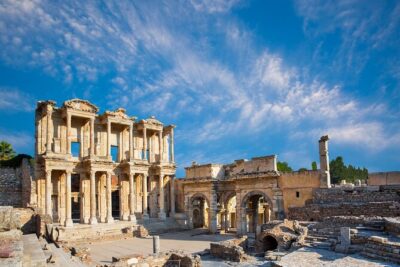
PRIVATE TOUR FOR CRUISERS: Mary’s House (Meryemana) and Ephesus
Read our review →
Ephesus & Artemis Tour for Cruisers WITH ENTRY TICKETS
Read our review →
Ephesus: Small Group Tour for Cruise Passengers
Read our review →