
REVIEW · BARCELONA
Shore Excursion: Barcelona City Tour Hop-On Hop-Off
Barcelona’s hop-on hop-off bus gives you the city’s big picture quickly, from the waterfront and Gothic Quarter to Gaudí’s masterpieces, Montjuïc, and Camp Nou. The best feature is one ticket covering two interconnecting routes, so you can switch between the east and west sides without arranging separate transport.
I like the sliding roof, which keeps the open upper deck usable in light rain, and the free discount booklet for attractions, shops, and restaurants. The recorded multilingual narration gives you useful context as you ride, though the audio jacks can be unreliable and traffic can turn a short tour into a slow one.
The main catch is cruise-day timing. The port area can be confusing, buses may fill up at popular stops, and the last buses reportedly run until about 7 p.m. If you must return to your ship by a firm deadline, leave a generous buffer and consider using the bus mainly for an overview rather than trying to visit every stop.
Key points to know before you board
- Two routes cover a wide stretch of Barcelona: The East Route links the old center, beaches, Gaudí sights, and northern districts, while the West Route focuses on Montjuïc, Plaça d’Espanya, Camp Nou, and the western side of the city.
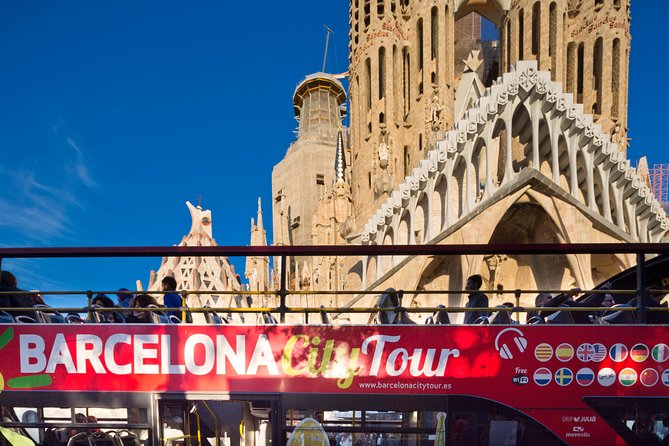
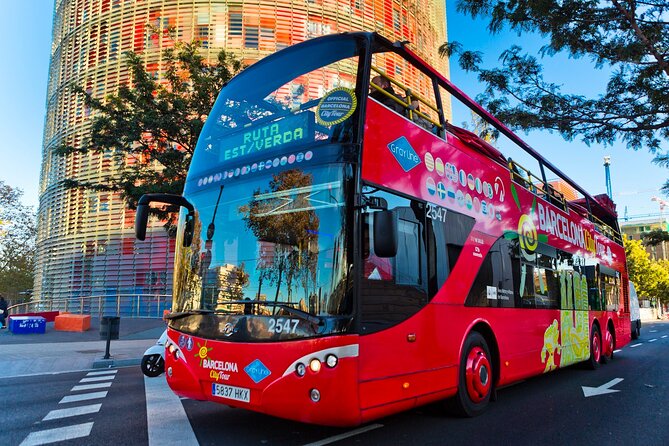
- The upper deck is the best seat for seeing Barcelona: Every bus is a double-decker with a sliding roof, so you get open-air views when conditions are good and some cover when rain arrives.
- Park Güell requires extra walking: The bus cannot reach the park entrance, and the stop involves an uphill walk with stairs. Allow more time than the map may first suggest.
- Traffic affects the value: Barcelona’s streets can slow the bus at lights and congested junctions. Riding the full loops is good for orientation, but hopping off only at your priorities makes better use of a short port call.
- Cruise passengers need a return plan: The World Trade Center area can be hard to navigate, and the cruise-port connection is not always simple. Do not wait for the final bus if your ship’s departure time is close.
- The experience costs $39.65 per person: That is reasonable if you use both routes or make several stops, but less attractive if you only ride one loop and spend much of the day in traffic.
What this Barcelona bus tour is really good at
This is an orientation tour first and a sightseeing vehicle second. From the upper deck, you can connect Barcelona’s separate districts in one ride: the medieval center, the Olympic waterfront, Eixample avenues, Gaudí buildings, Montjuïc, and the stadium area.
That broad view matters on a first visit. Barcelona is spread out, and its most famous sights are not all within a comfortable walk of one another. The bus lets you see how the city fits together before choosing where to spend your limited time.
I would not treat the advertised 2 hours 20 minutes as a complete day in Barcelona. That is roughly the time needed for the ride itself under favorable conditions. Once you get off for Park Güell, the Sagrada Família, the Gothic Quarter, or Montjuïc, your day becomes much longer.
The recorded audio is available in multiple languages, including English. It gives you facts about the districts and landmarks as the bus moves, though it is not a live guide. Some buses also have audio systems adapted for people with auditory disabilities, using a multilingual looping system through headphones. Marked seats give priority to passengers who need that system.
More City Highlights Shore Excursions in Spain
- Malaga Shore Excursion: City Sightseeing Malaga Hop-On Hop-Off Bus Tour
★ 4.0 · 139 reviews - Cadiz Shore Excursion: City Sightseeing Cadiz Hop-On Hop-Off Bus Tour
★ 4.0 · 124 reviews - Shore Excursion: City Tour with Tapas in 11th Century Monument
★ 5.0 · 113 reviews
East Route: beaches, Gaudí, and the old city
The East Route is likely the most useful choice for a first Barcelona visit. It combines the historic center, seaside neighborhoods, the city’s most famous modernist buildings, and Park Güell.
Pla de Palau and the waterfront
Pla de Palau is a useful starting point near the old harbor and the southern edge of the historic center. From here, you are close to Barceloneta, the waterfront, and the lanes of the old city.
The bus then moves through Barceloneta Beach, Port Olímpic, Platja Bogatell, and Platja de la Nova Mar Bella. These stops show a different side of Barcelona from the cathedral-and-palace image many first-time visitors carry.
Barceloneta is the most central beach area and can be a convenient place to get off for a short walk. Port Olímpic reflects the city’s major waterfront changes around the 1992 Olympics. Bogatell and Nova Mar Bella give you a longer view of the coast, though they are less useful if you have only a few hours before returning to your ship.
The Forum Sport stop and Glòries move you into the newer eastern districts. Glòries is especially useful as a connection point for modern Barcelona, but it is not the place to linger if your main goals are Gaudí and the old city.
Sant Pau and Park Güell
Recinte Modernista de Sant Pau is one of Barcelona’s great modernist complexes. It is close to the Sagrada Família area and offers a chance to see Catalan architecture beyond Gaudí’s best-known buildings.
Park Güell is one of the most requested stops, but it requires planning. The bus cannot drive to the park entrance, so you must walk from the stop. The route includes an uphill stretch and several stairs, and the distance can feel longer than expected.
If you have timed admission for Park Güell, protect that appointment. Do not assume the bus stop is right outside the gates. Traffic, a full bus, and the walk uphill can all use up time. For a shore excursion, this is one of the stops where a taxi may save the day if your schedule is tight.
More City Highlights Shore Excursions in Barcelona:
- Santorini Must-See Highlights: Private Shore Tour
★ 5.0 · 569 reviews - Tauranga Shore Excursion: Rotorua Highlights
★ 4.5 · 427 reviews - Skagway Shore Excursion: White Pass Summit and Skagway City Tour
★ 4.5 · 417 reviews - St Thomas Shore Excursion: Shopping, Sightseeing and Beach Tour
★ 4.0 · 367 reviews
La Pedrera and Casa Batlló
The bus next reaches two of Antoni Gaudí’s best-known buildings on Passeig de Gràcia: La Pedrera, also called Casa Milà, and Casa Batlló.
These are excellent hop-off points because they sit in a central part of the Eixample district, where you can continue on foot toward other sights, shops, and restaurants. La Pedrera is known for its curving stone exterior and rooftop forms. Casa Batlló has a more colorful, dreamlike façade.
The bus gives you a quick view from street level, but it does not include entry to either building. If you want to go inside, check opening times and reserve admission separately. The value of the bus here is transport and orientation, not admission.
Arc de Triomf and Ciutadella Park
The route continues to Arc de Triomf and Ciutadella Park, two pleasant stops for stretching your legs. Arc de Triomf marks the entrance to a broad promenade, while Ciutadella Park provides open space near the old city.
These stops work well if you want a break from traffic and recorded narration. They also put you within reach of the Gothic Quarter and central Barcelona, though you should watch your time before heading back toward the port.
West Route: Montjuïc, museums, and Camp Nou
The West Route covers a different part of the city and is the better choice if you want Montjuïc, the Olympic sites, Plaça d’Espanya, or FC Barcelona’s stadium area.
World Trade Center and Miramar Gardens
The route begins at the World Trade Center parking area near the port. This is where cruise passengers may face the greatest confusion. The area is large, and the stop can be difficult to identify if you are not already familiar with the port layout.
The bus then climbs toward Avinguda Miramar and the Miramar Gardens. These stops provide views across the city and harbor, but the hillside route takes time. If the day is hot, windy, or rainy, you may prefer to stay on the bus rather than make several short stops.
Olympic Ring and Montjuïc museums
The Olympic Ring is one of the strongest parts of the West Route. The area recalls Barcelona’s 1992 Olympic Games and includes large public spaces that feel very different from the narrow streets downtown.
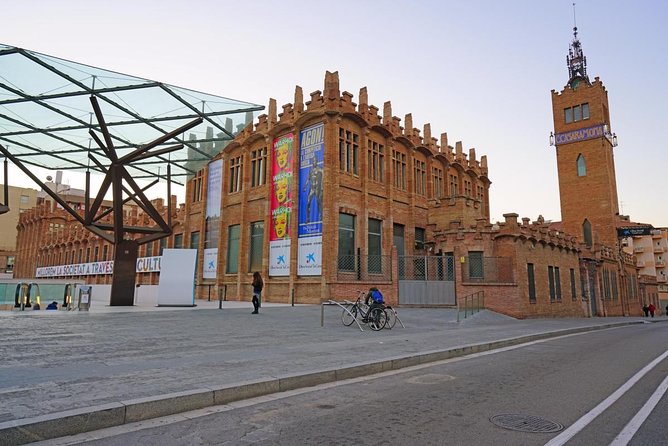
The Museu Nacional d’Art de Catalunya stop gives you access to one of Barcelona’s major art museums and an imposing view over Plaça d’Espanya. Poble Espanyol offers a constructed village-style display of Spanish architecture and crafts. CaixaForum Barcelona adds another cultural stop nearby.
You cannot do all of these places properly during a short port call. Pick one or two. Montjuïc rewards a slower visit, but the bus is useful for deciding which part interests you most.
Plaça d’Espanya and Sants
Plaça d’Espanya is one of the city’s most recognizable squares and a practical transport point. The route also stops near Parking Estació de Sants, the city’s main railway station area.
The stop at Plaça de Francesc Macià is subject to cancellation because of works, with an alternative location being used. City events, demonstrations, sporting events, official functions, and public works can also change the route. Check the current stop arrangement on the day rather than relying only on an older map.
Camp Nou and the Diagonal
The West Route reaches Spotify Camp Nou, home of FC Barcelona. The stadium stop is worthwhile for football fans, but the bus ticket does not include stadium admission or a match.
The route then follows Avinguda Diagonal, with stops at numbers 635 and 571, before returning toward La Pedrera. Diagonal is a useful way to understand the scale of Barcelona’s Eixample, but it is not as rewarding for a short stop as the main Gaudí buildings or the old center.
Sagrada Família and the return to the port
The West Route also includes Sagrada Família, Barcelona Nord Bus Station, Carrer de la Marina, Port Olímpic, and Pla de Palau. This makes route switching possible, but it can also create confusion because several stops connect to both sides of the city.
Sagrada Família is the one stop where buses can become especially crowded. If you board there, upper-deck seats may be limited. Some riders have also found the narration less consistent on particular buses, with music playing instead of the expected commentary.
Give yourself extra time at this stop. Even if you only view the basilica from outside, the surrounding streets can be busy and the bus may not arrive with open seats.
How to use the bus without losing your day
I would begin by deciding what kind of day you want. If you want a city overview, stay aboard for a substantial part of one route. If you want to visit major sights, choose two or three stops and ignore the rest.
A useful first plan is:
- Ride the East Route for the old city, waterfront, Sagrada Família, and Gaudí buildings.
- Get off at one major attraction rather than trying to enter several.
- Use the bus to reach a second area only if the next departure is convenient.
- Keep the final part of your day for returning to the port, not for one more distant stop.
The buses generally run at useful intervals, but full vehicles can change the plan. At popular stops, you may need to wait for the next bus. In one reported case, waits stretched to about 90 minutes during a very busy spring break period, followed by another long wait after changing routes.
That kind of delay is not normal planning, but it is possible on a crowded cruise day. If seven cruise ships are in port, the service may be overwhelmed. I would never schedule a must-not-miss ship departure immediately after a final hop-off.
The bus operates into the evening, reportedly until around 7 p.m., but the exact final departure matters less than where you are when service ends. A bus that stops running while you are near Park Güell or Montjuïc may leave you needing a taxi or local transit.
Weather, seating, and practical comfort
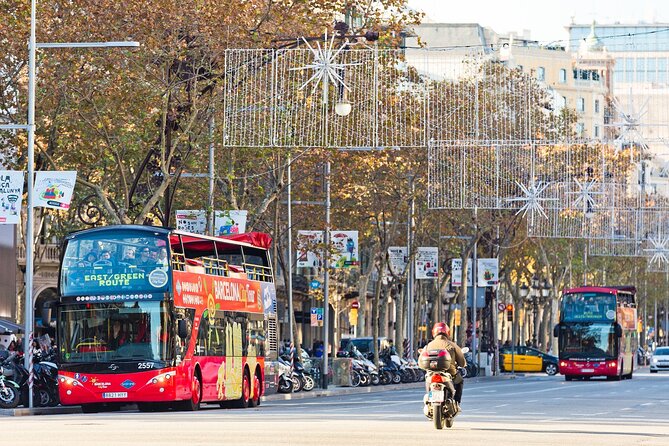
The upper deck gives you the best views, but it can be much colder than the street. Even in spring, bring a jacket, hat, or scarf if you plan to sit outside. Wind picks up quickly when the bus is moving.
The sliding roof helps in rain, but it does not make the bus completely weatherproof. Water can enter around doors, windows, and stairways during heavy rain. On a wet day, an inside seat is more comfortable, though views are less open.
Air conditioning is provided, and the coaches are designed for sightseeing. The audio system uses headphone connections, but the 3.5-millimeter plugs may crackle or fail on some buses. Bring your own compatible headphones if you have them, but do not assume that will solve every equipment problem.
Pets are allowed only when carried in a properly prepared basket. Service animals are allowed. Most people can participate, but the uphill walk and stairs at Park Güell matter if you have limited mobility.
Is $39.65 a fair price?
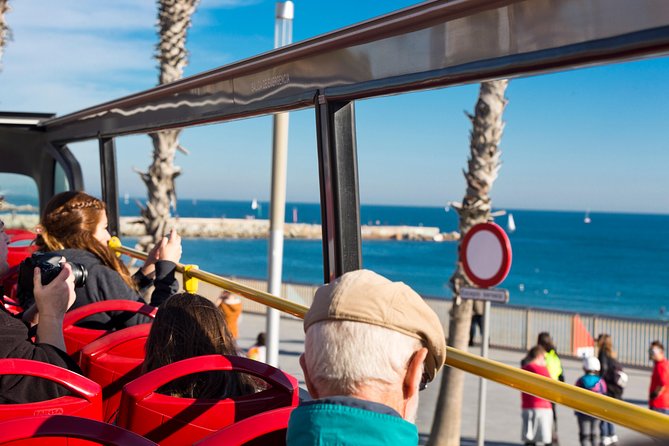
At $39.65 per person, the tour is fairly priced if you use it as transportation between several distant parts of Barcelona. The value improves when you ride both routes, make multiple stops, and use the discount booklet at eligible attractions, shops, or restaurants.
It is weaker value for a simple two-hour ride with no stops. Barcelona is a very walkable city in its central districts, and a short route through the old center may not justify the fare if you are comfortable using local transport.
The bus also saves you from navigating the metro and gives you a safer-feeling option if you are concerned about pickpockets. That does not remove the need to watch your belongings, but it can make the day simpler for first-time visitors.
The ticket includes all routes and stops, air-conditioned coaches, multilingual audio, the route guide, and the discount booklet. Food and drinks are not included. Cancellation is free up to 24 hours before the scheduled start time. Within 24 hours, the fare is not refunded, and late changes are not accepted.
Who should book this shore excursion?
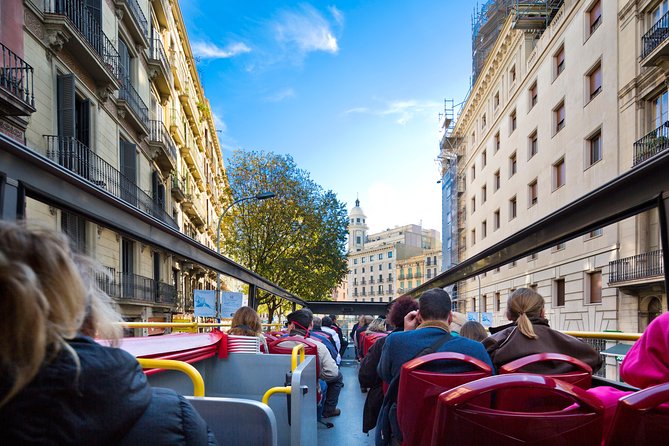
I would choose this bus if you want a broad look at Barcelona, prefer not to manage local transport, or are traveling with people who need an easy way to connect far-apart sights. It also works well for deciding which neighborhoods deserve a longer return visit.
It suits first-time visitors who value flexibility more than speed. The ability to hop off at beaches, Gaudí buildings, Montjuïc, or Camp Nou is useful, especially when everyone in your group wants something different.
I would be cautious if your cruise call is short, your ship has a strict return time, or you plan to visit several timed attractions. In that case, traffic and full buses can work against you. A private transfer or carefully planned taxi rides may offer better control, though you would lose the broad city overview.
Should you book the Barcelona City Tour bus?
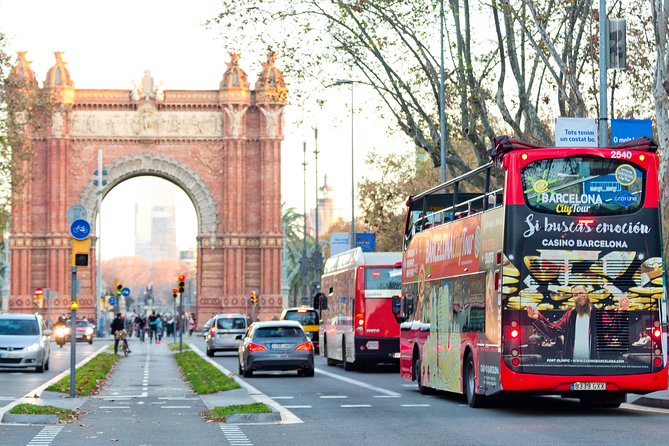
Book it if your goal is to see how Barcelona fits together and choose a few stops rather than conquer the entire city. The two routes cover an impressive range, and the bus offers an easy first look at the waterfront, Gaudí architecture, Montjuïc, and Camp Nou.
Skip it if you need a tightly timed sightseeing day or expect a live guide and nonstop movement. Plan conservatively, start early, avoid leaving your return to the final bus, and treat Park Güell as a separate walking visit. Used with those limits in mind, this is a practical introduction to a large, rewarding city.
FAQ
How much does the Barcelona hop-on hop-off shore excursion cost?
The listed price is $39.65 per person.
How long does the tour take?
The approximate duration is 2 hours 20 minutes. If you get off to visit attractions, beaches, museums, or neighborhoods, your total day will be longer.
Does one ticket cover both bus routes?
Yes. A single ticket covers all listed routes and stops, including the East Route and West Route.
Is the tour offered in English?
Yes. The experience is offered in English and includes a multilingual audio guide system.
Does the bus have an open roof?
The double-decker buses have a sliding roof. This allows an open-air upper deck when conditions are pleasant and provides some cover when it rains.
Is Park Güell directly beside the bus stop?
No. The bus cannot reach the park entrance. You must walk from the stop, and the route includes an uphill section and stairs.
Does the ticket include food, drinks, or attraction admission?
No. Food and drinks are not included unless specifically stated, and admission to attractions is not included.
Can service animals and pets use the bus?
Service animals are allowed. Pets are allowed only when transported in a properly prepared basket.
Can the route change?
Yes. Stops and routes may change because of demonstrations, sporting events, cultural events, official activities, and public works. The Plaça de Francesc Macià stop is specifically subject to cancellation because of works, with an alternative location provided.
Just added around Barcelona
- Private Transfer from barcelona Cruise port to City Hotels★ 5.0 · 9 reviews
- Barcelona Cruise port to barcelona city private transfer★ 5.0 · 21 reviews
- Transfer from Barcelona City to cruise port Private transfer★ 4.5 · 7 reviews
- Barcelona Arrival Private Transfer Cruise Port to City Center★ 4.5 · 6 reviews
- Barcelona Arrival Private Transfer Cruise Port to City Center★ 5.0 · 10 reviews
- Arrival barcelona Cruise Port to Barcelona City★ 5.0 · 4 reviews
- Sunset On A Luxury Sailboat From Port Olimpic★ 5.0 · 20 reviews
- Barcelona City to Cruise Port Private Transfer★ 4.0 · 13 reviews
Barcelona Shore Excursions, compared.

Barcelona Private Transfer from City Centre to Cruise Terminal
Read our review →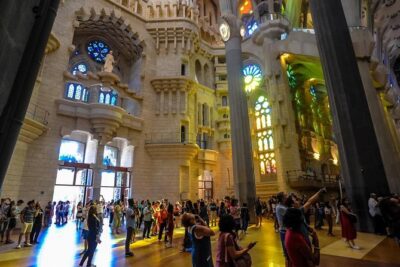
Best of Barcelona Shore Excursion & Sagrada Familia Skip the Line
Read our review →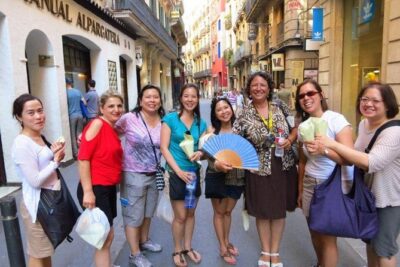
Best of Barcelona Excursion with Optional Attractions Tickets
Read our review →
Barcelona Sunset Sailing Cruise from Port Olímpic with Open Bar
Read our review →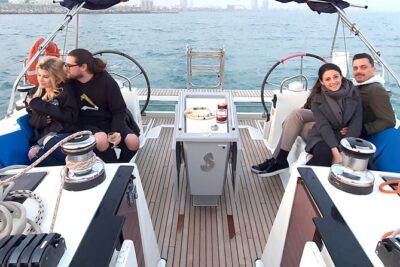
Barcelona Unforgettable Sailing Cruise with Open Bar and Snacks
Read our review →
Barcelona Private Transfer from Cruise Terminal to City Centre
Read our review →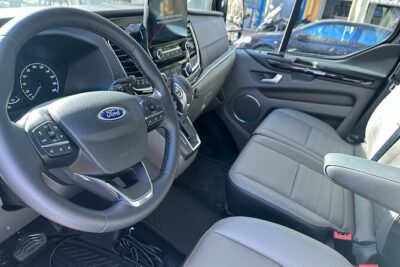
Barcelona Arrival Private Transfer Cruise Port to City Center
Read our review →Barcelona Private Transfer from Cruise Terminal to City Centre
Read our review →Browse the lists this tour appears in